

The Saturday night trapping session was, as expected, a busy night with 243 moths of 65 species, the biggest total of the year so far (and quite likely to turn out to be the best for the whole year.)
The best record of the night was probably also the smallest moth in the trap, just shy of 4mm in total length, Etainia decentella.
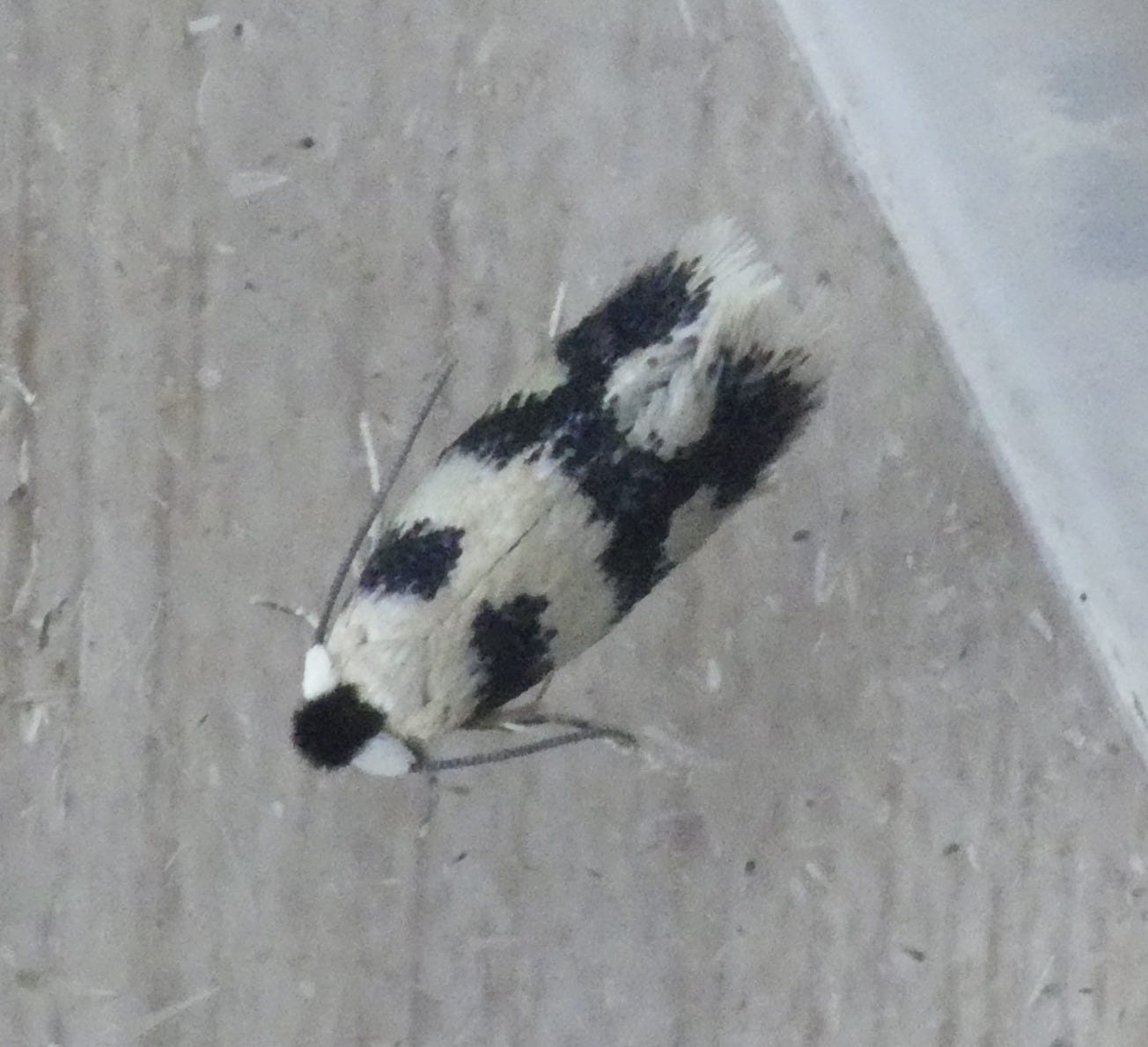
Etainia decentellaThis moth is new for me, although of course it’s quite likely I’ve overlooked it before, such small moths are easy to miss! I was pleased to see it for another reason too. Our neighbour has a large sycamore tree growing close to our fence and overhanging it, and every year we spend ages pulling up sycamore seedlings, they get everywhere. Well the larva of this moth feeds on sycamore seeds! Actually there aren’t many insects that make use of sycamore, but this is one of them. Unfortunately though, it’s so small that it would take thousands of them, if not millions, to make much difference!
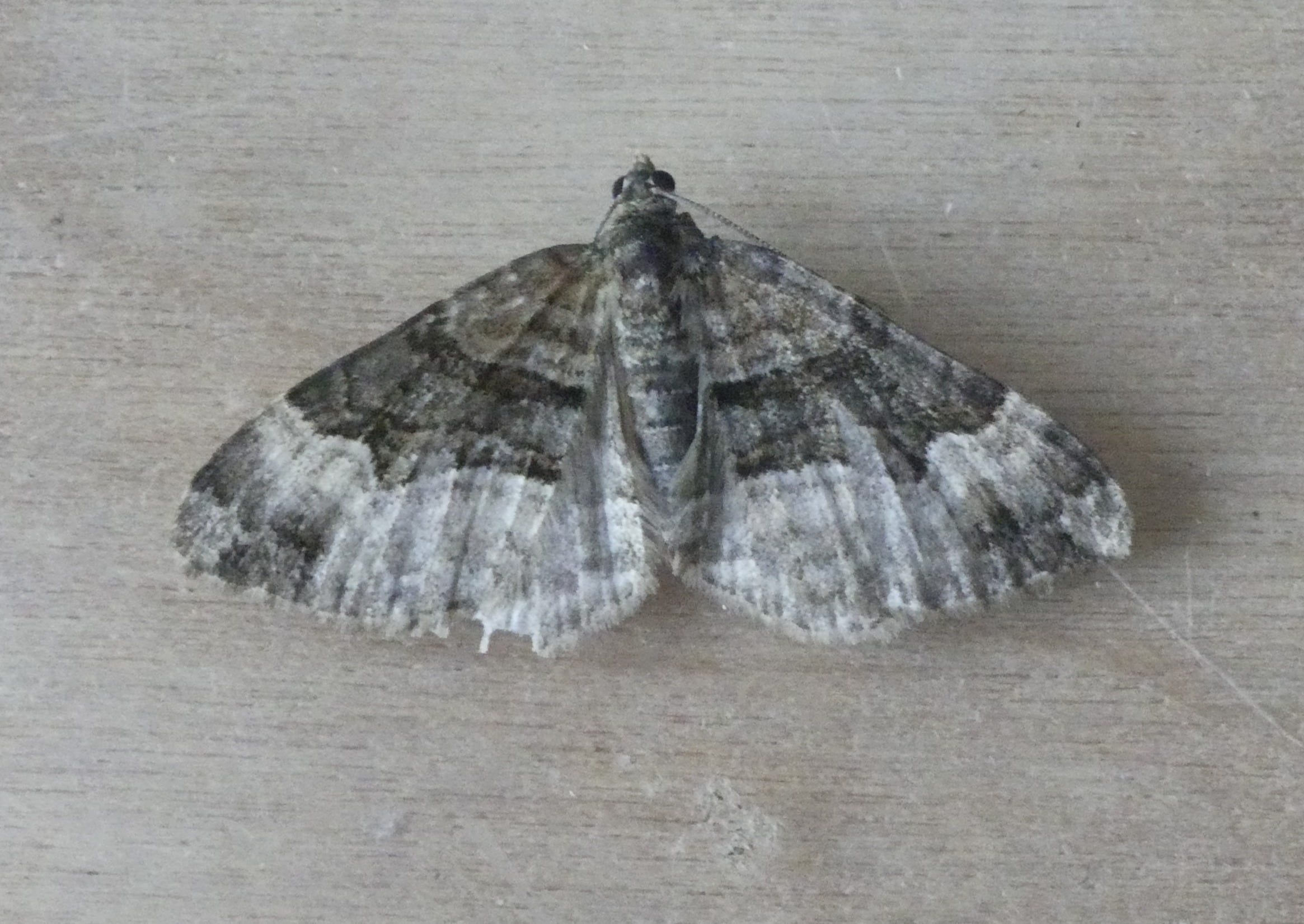
One other moth that appeared for the first time in my garden trap was the Balsam Carpet, Xanthorhoe biriviata.
Balsam Carpet, Xanthorhoe biriviata
I saw this moth for the first time only a few weeks ago, when I was visiting Michelham Priory (just north of Eastbourne) and walking round the grounds. It’s thought to be a migrant from the continent, and some years none at all are recorded in Sussex. Apart from the two I’ve seen there seems to be only one Sussex record for the past few years. On the continent its main food plant is Orange Balsam, which grows at Michelham, so maybe it’s establishing a foothold there.
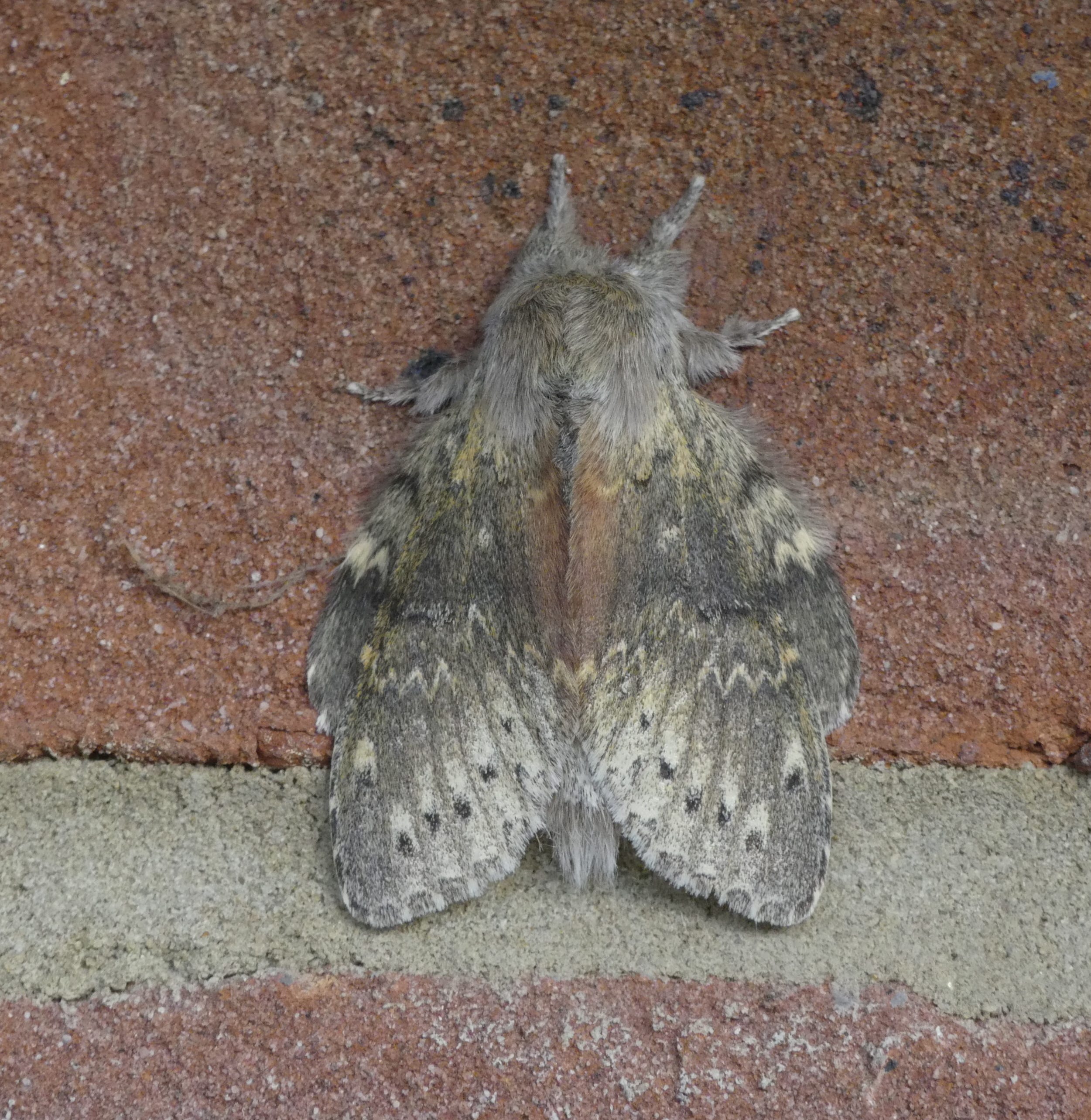
Another moth which I don’t often see is the Lobster moth, Stauropus fagi, but the one that came on Saturday is the second I’ve seen this year.
Lobster moth, Stauropus fagi
As you can see, there’s nothing about the adult moth that looks like a lobster! But this moth has an unusual caterpillar (which I’ve never seen), and that’s where this moth gets its name from.
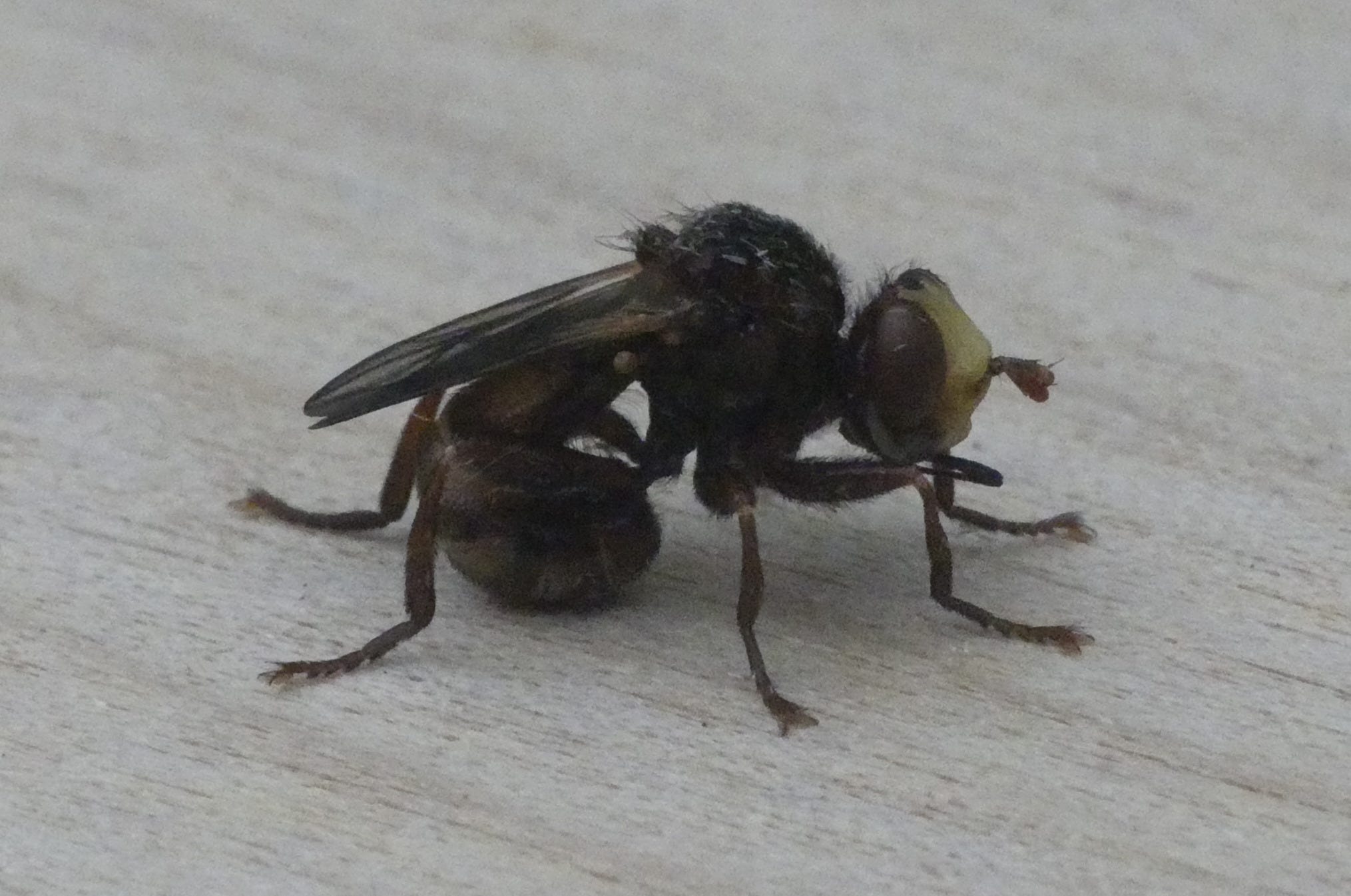
Finally for this post, something that’s not a moth at all. Various other insects also appear regularly in the trap: flies, beetles, caddis flies, lacewings, wasps etc. But I’ve never had this particular species of fly in the trap before, and on Saturday there were two of them.
Ferruginous Bee-grabber, Sicus ferrugineus
This is a rather weird-looking fly! It’s a parasite of bumblebees. The name ‘bee-grabber’ describes the way the female lays its eggs on a bee - she grabs hold of a bee that’s flying or nectaring, curls her abdomen underneath the bee, pierces the bee’s abdomen with her ovipositor, and lays an egg inside the bee. When the egg has hatched the larva feeds on the bee from the inside, until it’s ready to pupate. Parasites that use this rather gruesome form of parasitism are called endoparasites. It’s remarkably common among insects; apologies for ending this post on such an unsavoury note!