
Moth Report #2
The Water Veneer, the Scarlet Tiger, the Common Lutestring and the Minor Shoulder-knot

Up at 4:20 to check the catch; as expected, quite a busy night, 232 moths of 54 different species. This brings my species total for the year so far to 189. For the last couple of years, I reached this total round about the end of June, so this is consistent with the opinion I’ve seen expressed a couple of times that the seasons are about a week or two head of where they usually are, presumably due to the sunny dry weather we’ve been having. Of the 232 moths, 84 were from the same species (actually, probably more, I stopped counting at 84!). This was a tiny moth known as the Water Veneer, Acentria ephemerella. The females of this species usually have only vestigial wings, so all the moths in the trap were males. The larva of this moth is aquatic, feeding on various pondweeds. Like mayflies, the adults tend to all emerge at the same time, and occur in swarms on warm muggy nights (like last night). Unlike other moths, in which the adult lifespan is measured in weeks, for the Water Veneer it is usually only a few hours, as implied by the species part of its Latin name.
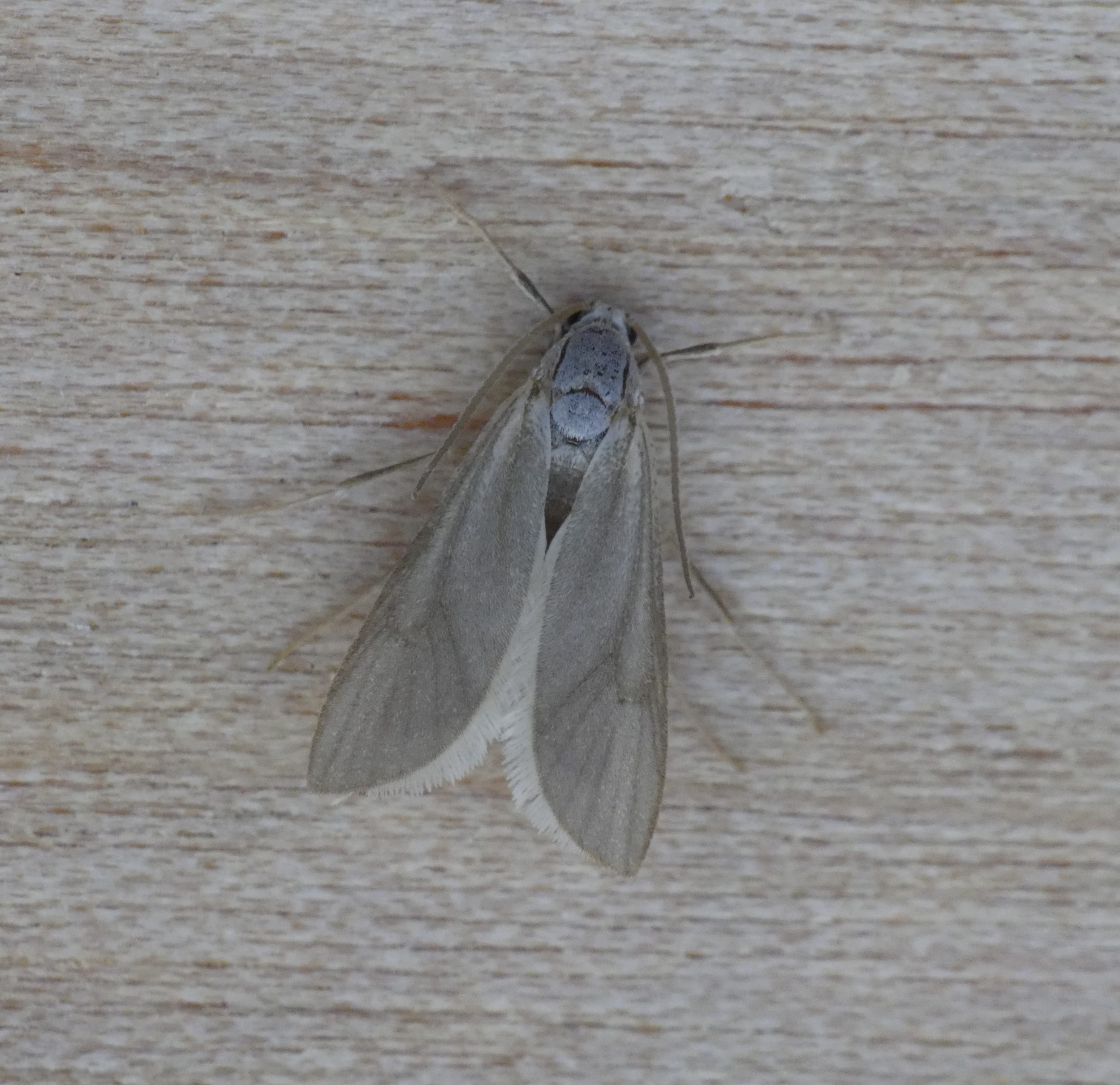
Water Veneer, Acentria ephemerella
In a way, this is not a good time of year to start a Substack about moth trapping. June and July are the peak months for moths, and catches can be rather overwhelming to enumerate, or to describe in a post. Starting in late winter, when catches are in the single digit range (sometimes even zero), would have made it a lot easier. So when someone wants to try their hand at moth trapping, I would always advise starting in the spring or autumn, when the catches are more easily managed.
So for this post I’m not going to list the full catch, but rather just pick out a few of the more interesting species. The first one I want to mention is the most colourful, the Scarlet Tiger, Callimorpha dominula. This is primarily a species found (in the UK) in the South West, with relatively few records from South East England. But maybe it’s increasing its range now, there were five in the trap last night - that’s more than I usually get in a whole year! The one in the photo is a bit tatty, but none of the other four wanted to hang around to have their photo taken.
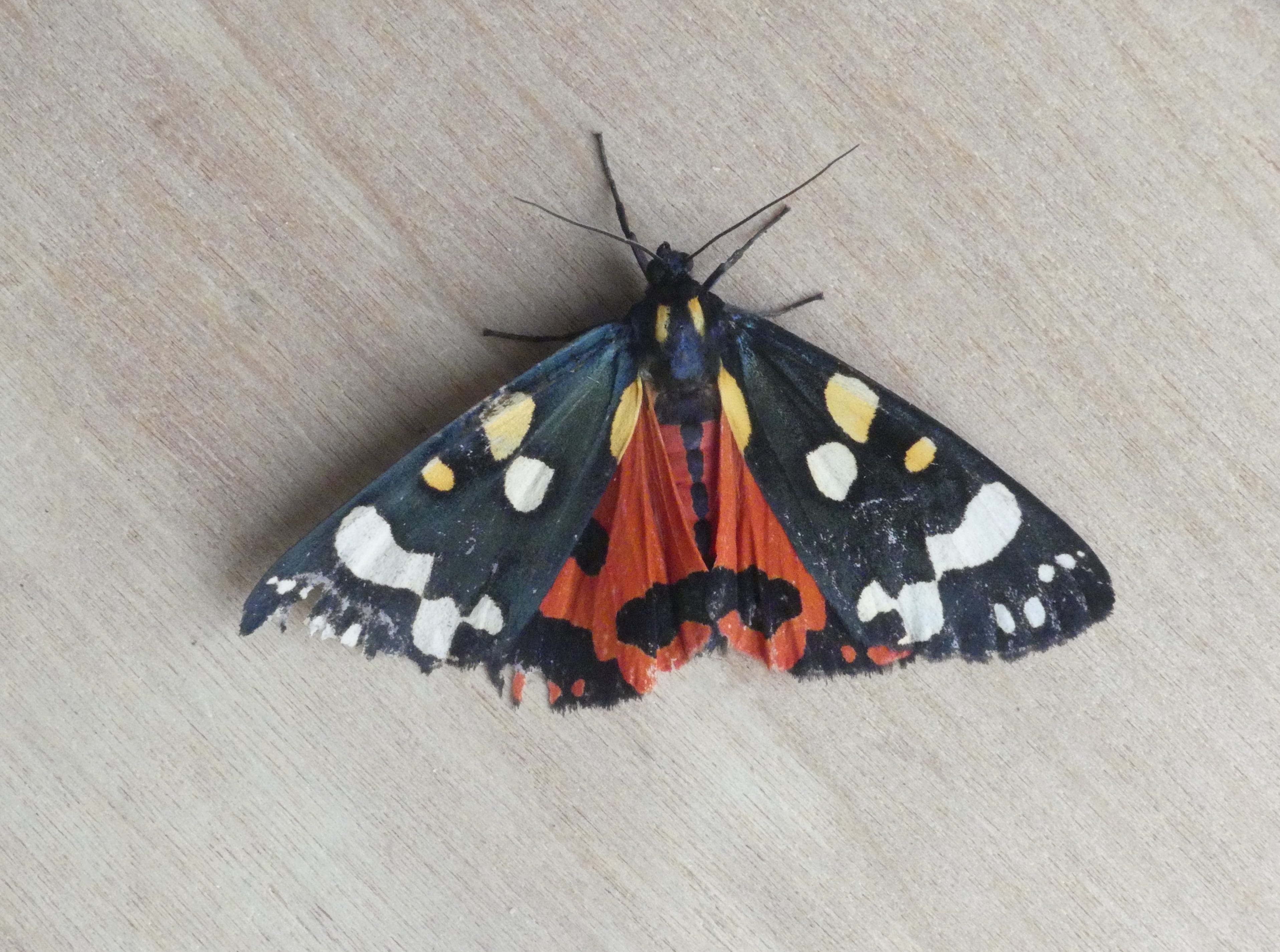
Scarlet Tiger, Callimorpha dominula
The next one I want to show you is the Common Lutestring, Ochropacha duplaris. This is a moth I don’t see very often. The reason I’ve chosen it is that when I went to photograph it, it flew off and I thought I’d missed my chance, but it landed on my driveway, against which it’s very well camouflaged.
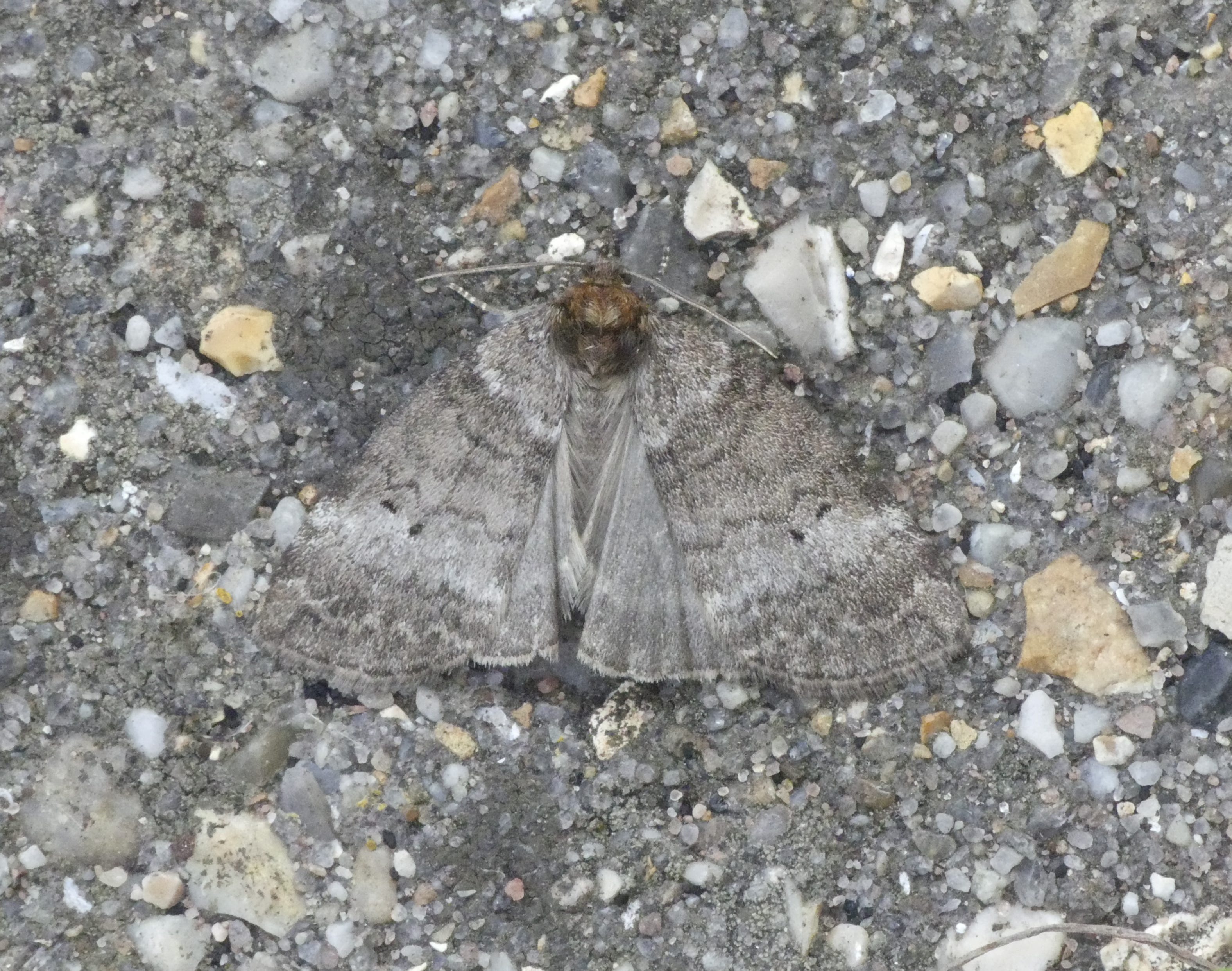
Common Lutestring, Ochropacha duplaris
And finally for this post, a moth that I’ve never recorded before! In my nine years of regular trapping, I’ve reached a species count of 720(ish). But I still get new ones now and again. So far this year the count has increased by 7, and this one is the latest: the Minor Shoulder-knot, Brachylomia viminalis. ‘Shoulder-knot’ is a phrase which occurs in the name of several (4) of our British moths, and indicates a black marking at the base of the forewing (where it joins the thorax).
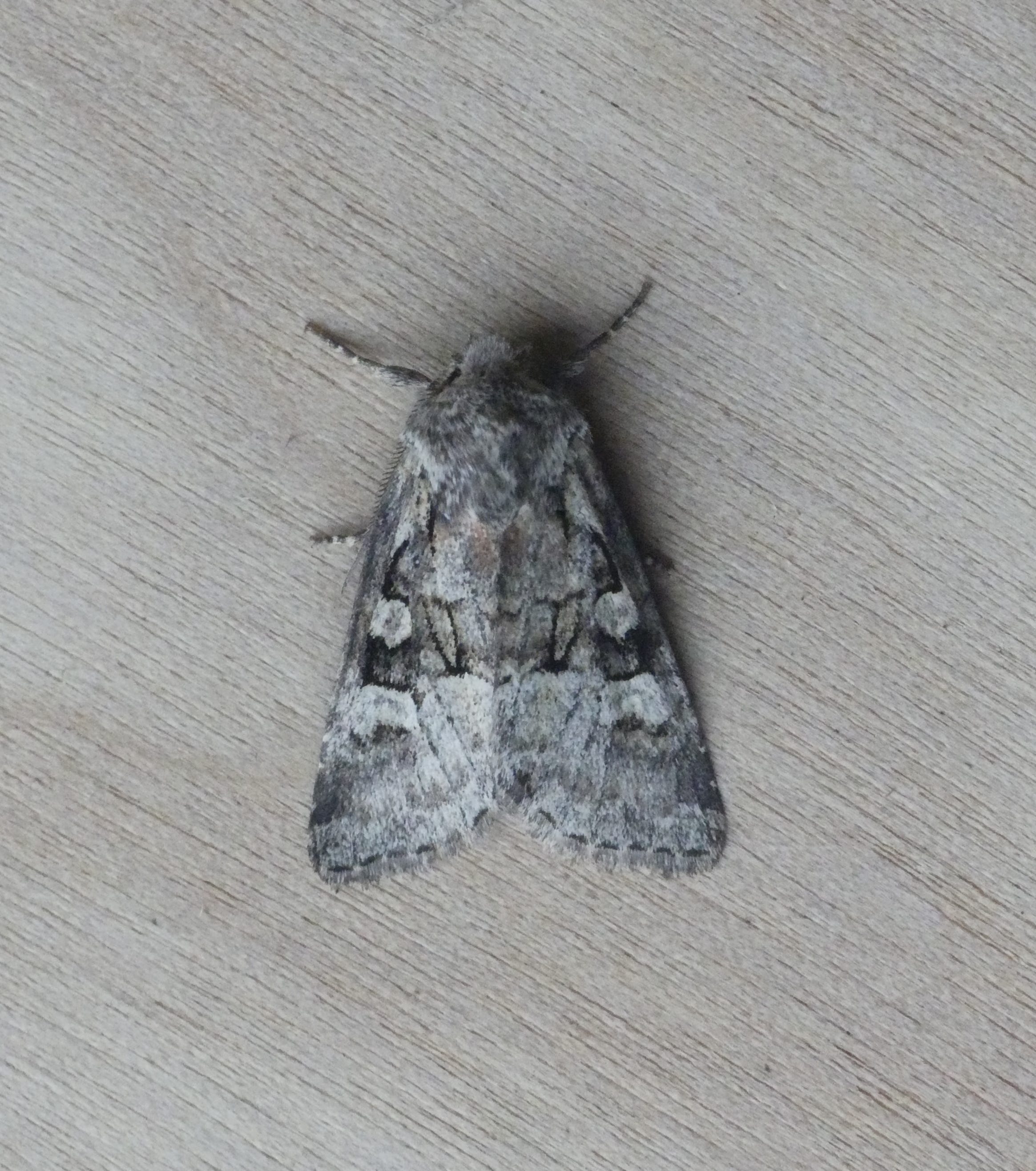
Minor Shoulder-knot, Brachylomia viminalis
Well, that’s it for this post. Thanks for reading, and see you next time, hopefully!