
Moth Report #30
The Barred Sallow, Plutella xylostella (aka the Diamond-back moth), the Flame Brocade and the Celery Fly
Welcome to my new subscribers (indeed, to all my subscribers!). This introductory blurb (in italics) will remain much the same from post to post; please skip it if you’ve read previous posts.
This newsletter will remain free, I’ve no intention of converting it to a paid subscription. It’s aimed at readers who have a general interest in nature and natural history, but maybe don’t know very much about moths. It’s not really aimed at people who regularly run their own moth traps, but of course they’re welcome to read it (even to criticise it if they wish!).
I run a light trap in my garden in Eastbourne (Sussex, UK) and the main objective of this newsletter is to post photos of some of the moths (and occasionally, other insects) that are attracted to the light, and to say a little about them. On average I run the trap about one night in three, and the plan is to write a post once a week, featuring two or three of the moths seen in the trap within the previous couple of weeks.
In the morning I photograph any catches of special interest, then all moths and other insects caught in the trap are released (if they haven’t escaped already!).
This is my ninth year of running a garden moth trap, firstly three years in Eastbourne (2017-2019), then three in Hurstpierpoint (2020-2022), and then back in Eastbourne (2023 onwards). Hopefully, yet more house moves are off the cards for the foreseeable future!
Report for w/b 20th October
Just the one night running the trap this week, on the Tuesday (21st) … storm Benjamin ruled out some of the nights! Although the catch for Tuesday was only marginally above average for October, 45 moths of 22 species, there were no fewer than five species I’d not recorded so far this year, one of which is a very occasional migrant to this country, the Small Marbled, which is a new species for me. Also there was a second Flame Brocade, following one from last week and which I feature in more detail later in this report. And I should probably also mention the first November moth of the year (it’s not unusual for them to appear in October). So plenty of species to choose from for next week’s report!
Let’s move on to look at some species seen recently.
The Barred Sallow, Tiliacia aurago
Year total to date: 5 (latest 13th October (3))
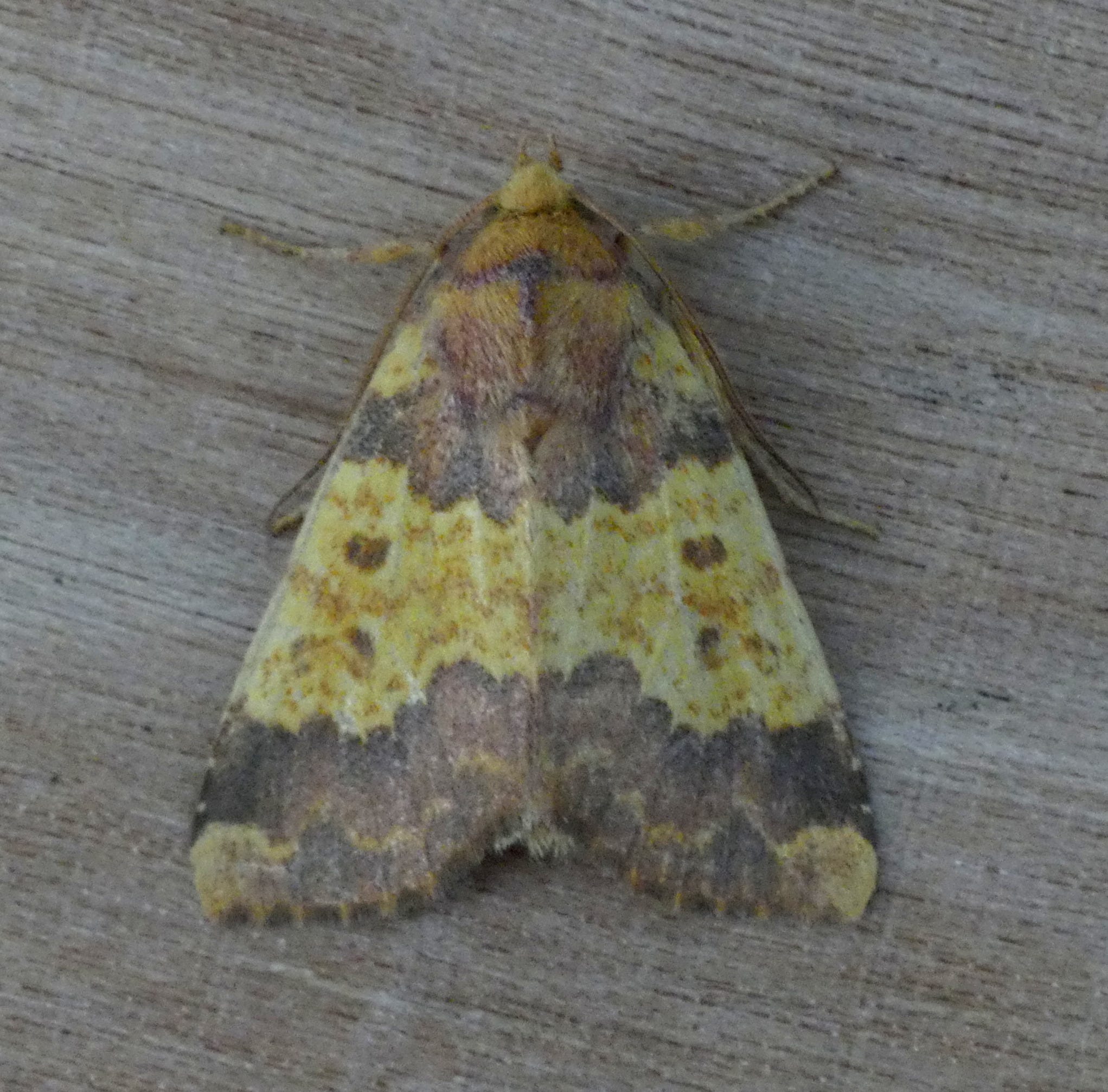
This is another of the autumn-flying moths with a yellow/brown colour theme which are grouped together under the name ‘Sallow’. This is one I’ve seen a few of every year since I started running the trap, except for last year when it was missing.
Like other moths in the Sallow group, this one is quite variable in appearance, but although I’ve now seen 43 examples of the moth in total, the degree of variation I’ve seen is not that large. For a better idea of the range of colour forms that have been recorded, check the Sussex Moth Group website here.
Reading about the history of this moth in Sussex, I came across a reference to one of the 20th century’s greatest experts on the Noctuidae (the family of moths to which the Barred Sallow belongs). This is Archibald J.C. Wightman (1884-1971). Colin Pratt, the Sussex County Moth Recorder, described him as ‘the foremost national authority’ on this moth; it seems the Barred Sallow must have been one of his favourites as he named his house ‘Aurago’ after the scientific species name for this species. It’s one of the best house names I’ve come across (the best being that of a musician I once knew, who named his house ‘Quaver’s Rest’).
Wightman bred (and released) thousands of these moths in a quest for unusual varieties, but this barely scratches the surface when placed in the context of his life-long contributions to entomology, and to the moths of this family in particular. He was a member of the South London Entomological and Natural History Society from 1920 until his death in 1971, by which time it had been renamed the British Entomological and Natural History Society. I was a member of that same society from about 1959 and used to attend some of its meetings at 29 South Audley Street, and go on some of its field trips, so it’s possible I met him.
Just by way of a diversion (nothing to do with the Barred Sallow at all), here is a photo I took in May 1972 of some of the members of the society on one of their field trips:
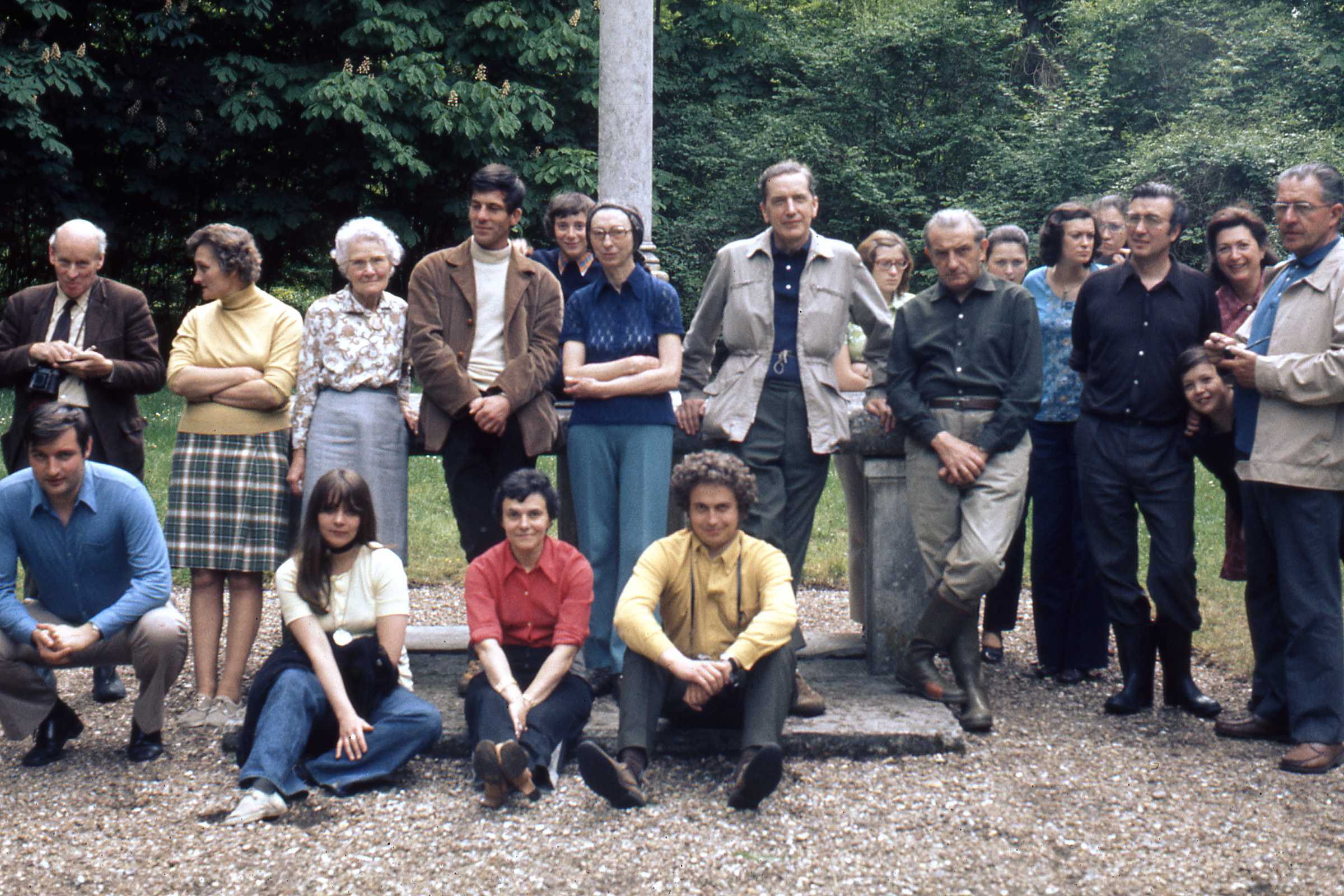
This was a special field trip to commemorate the Society’s centenary; instead of the usual one-day trip to somewhere in the south of England this was a three- or four-day trip to northern France, and some of the people in the photo are our French hosts. And here’s another photo from this trip, the Map butterfly, Arashnia levana:
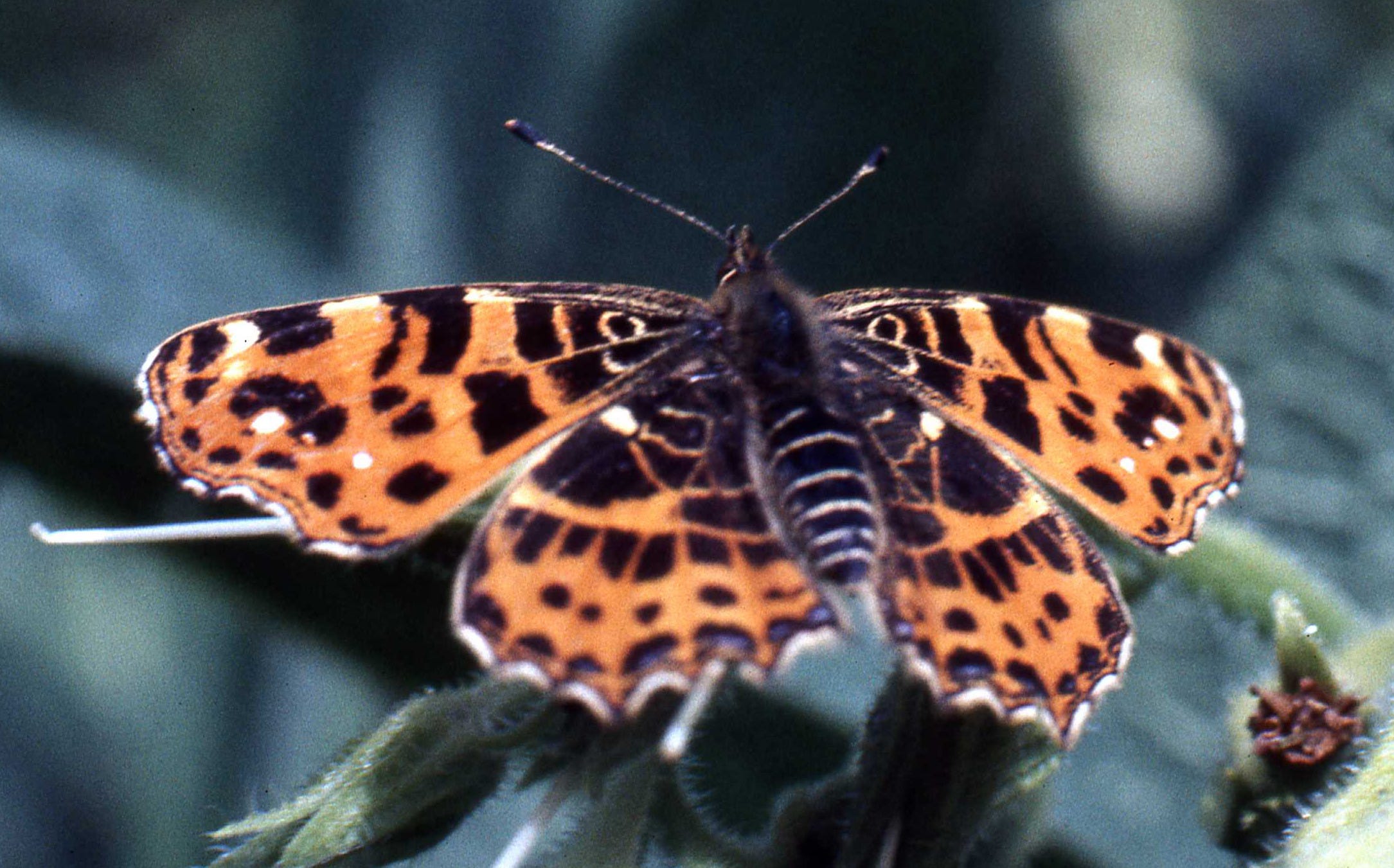
This butterfly has two generations a year, and is unusual in that the first generation (which this is) looks completely different from the second generation. However, this is supposed to be a moth report so I’ll try to get back on track.
Archie Wightman was born in Lewes in 1884 into a prosperous family in the ironmongery trade. He was interested in moths as a child. In 1909 he was given a ticket to Australia; to quote from one of his obituaries:
In Austalia he collected bird skins and the giant buprestid beetles for Queensland museum and learned his natural history there from a gun-toting outlaw with whom he lived rough.
(Buprestid beetles … a family of beetles known as Jewel Beetles).
After two years he wanted to get back to England to marry, but not having the money for his fare he worked his way back as a stoker. In WW1 he served as a tank commander and later as an instructor.
More from Colin Pratt…
The scale on which Wightman collected and reared his moths is still legendary. He reared ordinary larvae by the hundred, in batteries of cages altered to suit the feeding habits of each species. ….. From 1940 to 1965 he raised over 30,000 [Cente-barred Sallows] from larvae ingeniously trapped using corrugated paper wrapped around tree-trunks each spring - and as far back as the 1930s Wightman was releasing all his unwanted bred specimens back in their original localities.
Wightsman’s energy was prolific. His day-time job was as manager of a hardware store, but when he went out collecting at night, he would often stay out all night and then go straight to the shop in the morning for a full day’s work.
His wife died in 1957, after which he converted his car into a travelling moth-collecting workshop with its own sleeping compartment, and travelled the UK searching out the best mothing sites. By 1970 though he was no longer able to drive, and a friend who acted as a chauffeur and collecting companion died, so Wightman was left unable to pursue his interests productively. In January 1971, at the age of 86, he threw himself off a bridge into the icy waters of the River Arun.
His friend G. Haggett wrote two obituaries, which are available online here and here. Neither of them mention his suicide; it’s only through Colin Pratt’s entry in his book (one volume of which is pictured under the Flame Brocade entry below) that I know about it.
The scientific name for this species is fairly straightforward, but at the same time a bit misleading. The species name aurago is from the Latin aurum, ‘gold’, which also gave rise the chemical symbol for gold, ‘Au’. It refers to the striking golden-yellow colouration of the wings. I can’t help wondering whether Wightman painted his house yellow to match his choice of house name! The genus name Tiliacia points towards Lime trees (whose genus is Tilia). But the foodplants of this moth are Beech and Field Maple, so it’s not clear why this genus name was used.
The Diamond-back Moth, Plutella xylostella
Year total to date: 11 (latest 18th October)
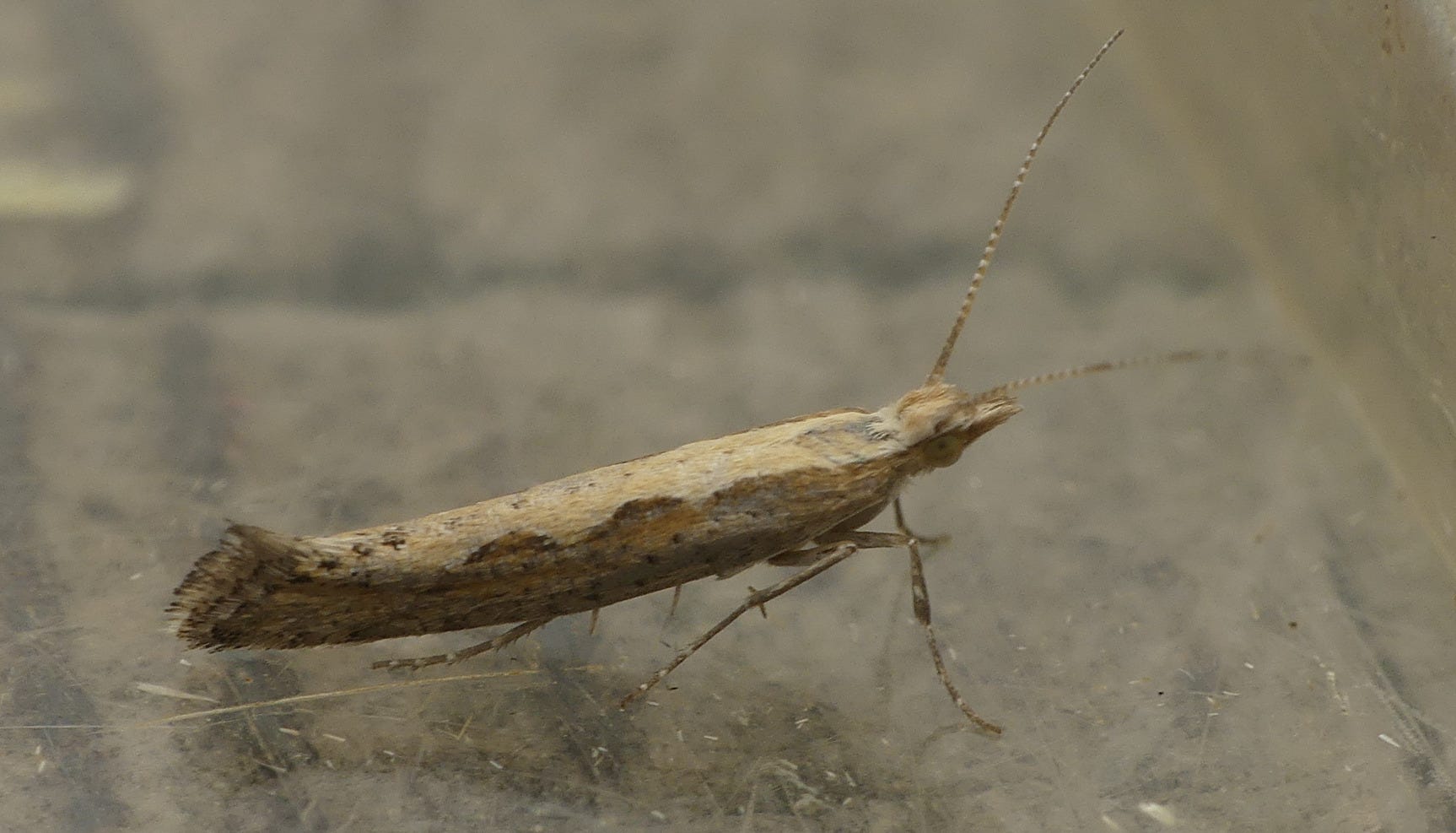
This is a small moth, one of the micros, with a total length (excluding the antennae) of about 8mm. It’s one of those micros which has a commonly accepted English name, the Diamond-back moth. In spite of its small size, it packs quite a punch in terms of its impact on agriculture. The caterpillars feed mainly on Brassicas - cabbage, broccoli, cauliflower, kale, Brussels sprouts, swede and others, and on a worldwide basis it is considered one of the most destructive agricultural pests there is. Global losses and control costs amount to about $4 billion annually. These food crops all produce glucosinolates which the plants evolved to protect them against being eaten by caterpillars, but the Diamond-back has evolved enzymes to detoxify these compounds.
In a warm climate the moth can go from egg to egg in as little as 12 to 14 days, so there can be several generations in a season. It has evolved resistance to many insecticides, and has even demonstrated resistance to biological control agents such as the bacterium Bacillus thuringiensis (it is one of the first insects to have achieved this).
One of the things that makes it such a problem is that it can travel large distances … many of those we see in the UK are considered to be migrants from the continent. I’ve seen evidence of this myself … I was on a cruise somewhere off the Channel Islands and several of these moths landed on the cabin balcony. Its worldwide distribution map can be seen here. What is noticeable is that in addition to its widespread coverage in Europe and America it is also found on lots of oceanic islands many hundreds of miles from the nearest continents, although most likely it arrived in the more out-of-the-way places as eggs or larvae on imported produce.
The Diamond-back was given its scientific species name, xylostella, by Linnaeus in his 1758 publication Systema Naturae. The relevant description can be seen here (fourth one down). Linnaeus’s descriptions were typically very short and succinct; for this moth he says ‘alis cinereis: vitta dorsali communi alba dentata’. Well I’m certainly no Latin scholar, but an electronic translator renders this as meaning ‘ashen (or grey) wings: a common dorsal stripe (along the back), white toothed’. Well the white toothed (or jagged) line down the back is obvious in the photo, and it is probably this that the -stella (star) part of the name relates to, as you could interpret the marking as a line of stars. But the first part of the word, xylo-, comes from the Greek xylon (wood) and it is not clear what this relates to. Some Brassica plants can have woody stems, but many caterpillars feed on much woodier plants (like trees) so it seems odd to pick that out for this moth. Maybe it was just the colour of the moth that reminded Linnaeus of wood.
The Flame Brocade, Trigonophora flammea
Year total to date: 2 (21st October)
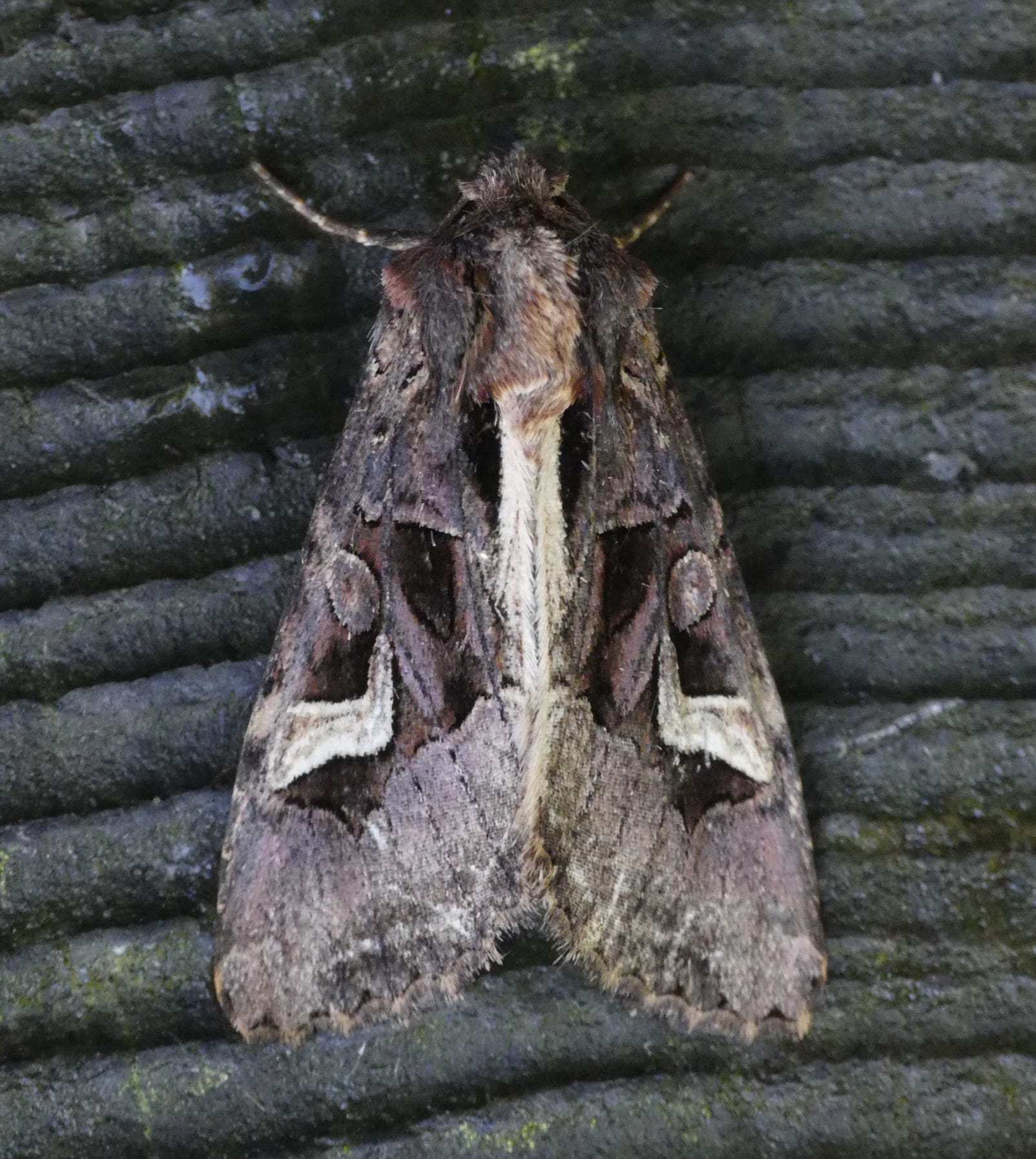
There are a handful of moths with the word ‘brocade’ in their English names, and this is the first I’ve covered in this newsletter. As a fabric, brocades are characterised by their intricate, raised patterns, often woven with silver and gold threads to create a shimmering, embossed effect. The term comes from the Italian broccato, meaning “embossed cloth”. Historically their use has been primarily for royalty and nobility, and by the church for copes, chasubles and alter cloths. It is thought that the use of the word in moth names derives from the similarity of the moths’ patterns and textures to these ornate fabrics. There is also the possibility that the patterns on the moths’ wings actually inspired designers to create new fabrics!
It’s no accident that Indian restaurants sometimes use brocade-like patterns for their wallpaper and upholstery. Brocade weaving has deep roots in India, especially in Banaras (Varanasi), where Banarasi brocade is famed for its silk and metallic threadwork. These patterns often find their way into interior design, echoing bridal saris and temple hangings.
Going back to the Flame Brocade moth, it is clearly a favourite with the Sussex County Moth Recorder, Colin Pratt, because he chose a picture of it for the cover of the final volume of his monumental (privately published) work on Sussex lepidoptera, each volume of which is a doorstop in its own right!
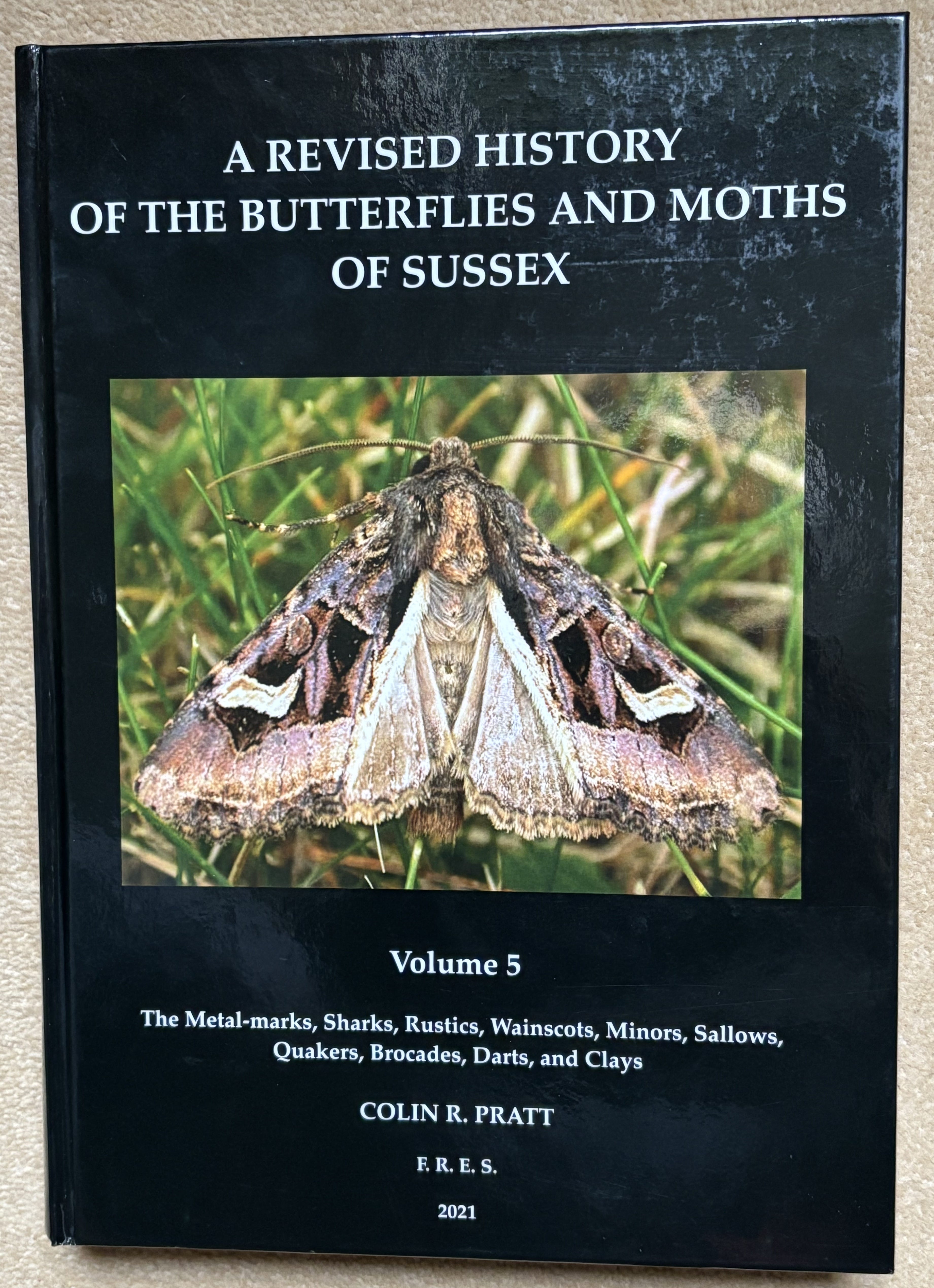
Inside it, his entry on this species fills almost nine pages. Today UK records are mainly immigrants, and the distribution is confined to sites near the south coast of England from Devon to Kent, plus the Scillies and the Channel Islands. However there are established colonies in Portland (Dorset) and near Eastbourne. The three examples I’ve had in my two gardens in Eastbourne (these two recent ones, and the only other time I’ve seen it, in 2019) are most likely vagrants from this nearby population, centred on a place called Horseshoe Plantation. The moth’s history in Sussex is rather chequered though. To quote Colin Pratt again:
… the colourful early history of the Flame Brocade in Sussex is permeated with secrecy, intrigue, and subterfuge, and bedevilled by deliberately misleading statements and misunderstandings, these all being punctuated by times of plenty and local extinctions.
The first UK records for this moth were in 1855:
In October of 1855 two Brighton collectors … set out on what was probably a routine autumnal evening’s hunt … near Pycombe. They must have been astonished when their sugar patches1 attracted five specimens of the Flame Brocade. So started one of the most extraordinary and celebrated episodes in Sussex entomological history.
Colin’s book recounts the story in much detail. I’ve done my best to summarize it. The exact location of the 1855 appearance was never publicly revealed.
[N]ear Pycombe during … 1856 the moth turned up again and “a good many were secured” by collectors, “and in 1857 many more”. … These high levels continued to be recorded - in 1859 one collector alone took 17 specimens.
Pycombe was not the only location where the moth was found:
A year after its detection near Brighton, the Flame Brocade was found commonly at Lewes, in 1856. … A local collector, M.S. Blaker, joined the hunt for the species in 1857 but found that the competition was already considerable - he counted “13 other Entomologists” [one night] and five on [another]. ….
By the next season the secret had leaked out even further afield. Blaker visited [the site] again but “went down late and found the whole locality sugared” by anonymous “youngsters”. “[M]ore than forty lanterns were observed there one evening” in 1858, … and individual tree-trunks were “frequently sugared in 7 or 8 places”; at least 49 specimens are known to have been taken during that season. Worse still, about 140 … were totalled by the avaricious locals alone in 1859, these being taken at a range of attractants at a rate of up to 42 individuals a night - this including Blaker’s personal take of 82 specimens for the season.
For the rest of the 19th century the numbers fluctuated somewhat but in most years the insect was scarce … which is hardly surprising given such intense collecting activity. When first discovered, “the moth was considered so rare and local, that fabulous sums were given for it” … “such was the rage for it at that time, that specimens fetched several guineas the pair” (perhaps approaching £1000 in today’s money). In the early part of the 20th century there are very few records of Flame Brocade from Sussex, with the last one being found dead in a spider’s web in an attic in 1919 (and looking like it had been there for at least a year!).
After 1919, nothing was seen of this species in Sussex until 1976 when one was taken at a light trap right on the coast near Bognor Regis. After that time sporadic sightings gradually increased in frequency, until in 2011 the population at Horseshoe Plantation, which I mentioned above, was first discovered when ten adults were caught in butterfly nets by lepidopterists wearing head torches, in a period of about half-an-hour.
To finish with this week, a departure from moths. This one is a fly, the Celery Fly, Euleia heraclei. In the picture it looks quite large, but it’s actually quite small, about the size of the fruit fly Drosophila.
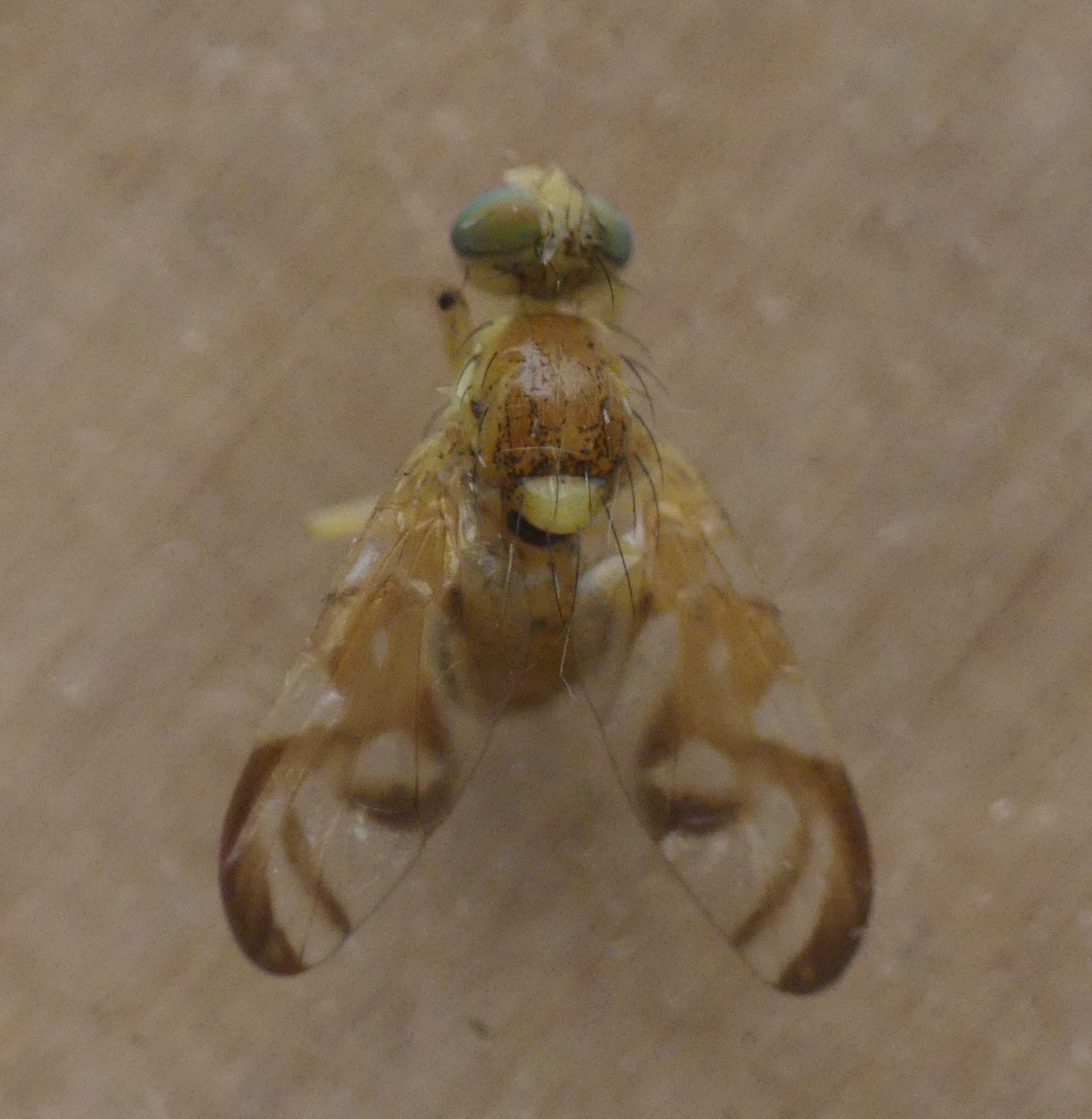
It was sitting in the trap following the trapping session on the 18th October. It’s one of a group of flies known as the Picture-winged flies. It’s an agricultural pest of celery and parsnips, and because the maggots live within the leaves of these plants (i.e. it’s a leaf-miner) it can be difficult to control with pesticides. It forms blotch mines, which can be multi-tenanted. It also feeds on Hogweed, whence it gets its specific name heraclei; Heracleum is the genus name for Hogweed.
That’s it for this week. The next issue is scheduled for Tuesday, 4th November.
Before the advent of light traps, most collectors relied on sugaring to attract moths; they smeared a mixture of molasses, syrup, sugar and beer on tree trunks and fence posts and waited with a lantern for the smell to attract the moths.
I love the “asides”! And the stories about past characters who were in this field - fascinating. Thank you!
Joy to read as always!