
Welcome to the Moth Report. If you’re a new reader of this newsletter, some background about my moth trapping can be found here, together with an index with links to all the species previously discussed.
Report for w/b 9th March
The forecast for the night of the 9th looked quite promising; mild and overcast with high humidity and no wind. This resulted in a total catch of 55 moths of 9 species - one of the best March nights I’ve had. Most of the moths (30) were Common Quakers (a record for me for a single night) and the main surprise was a lovely Waved Umber; this is the earliest I’ve seen this moth - most of my records for it have been in May. I’ll feature it in next week’s Moth Report.
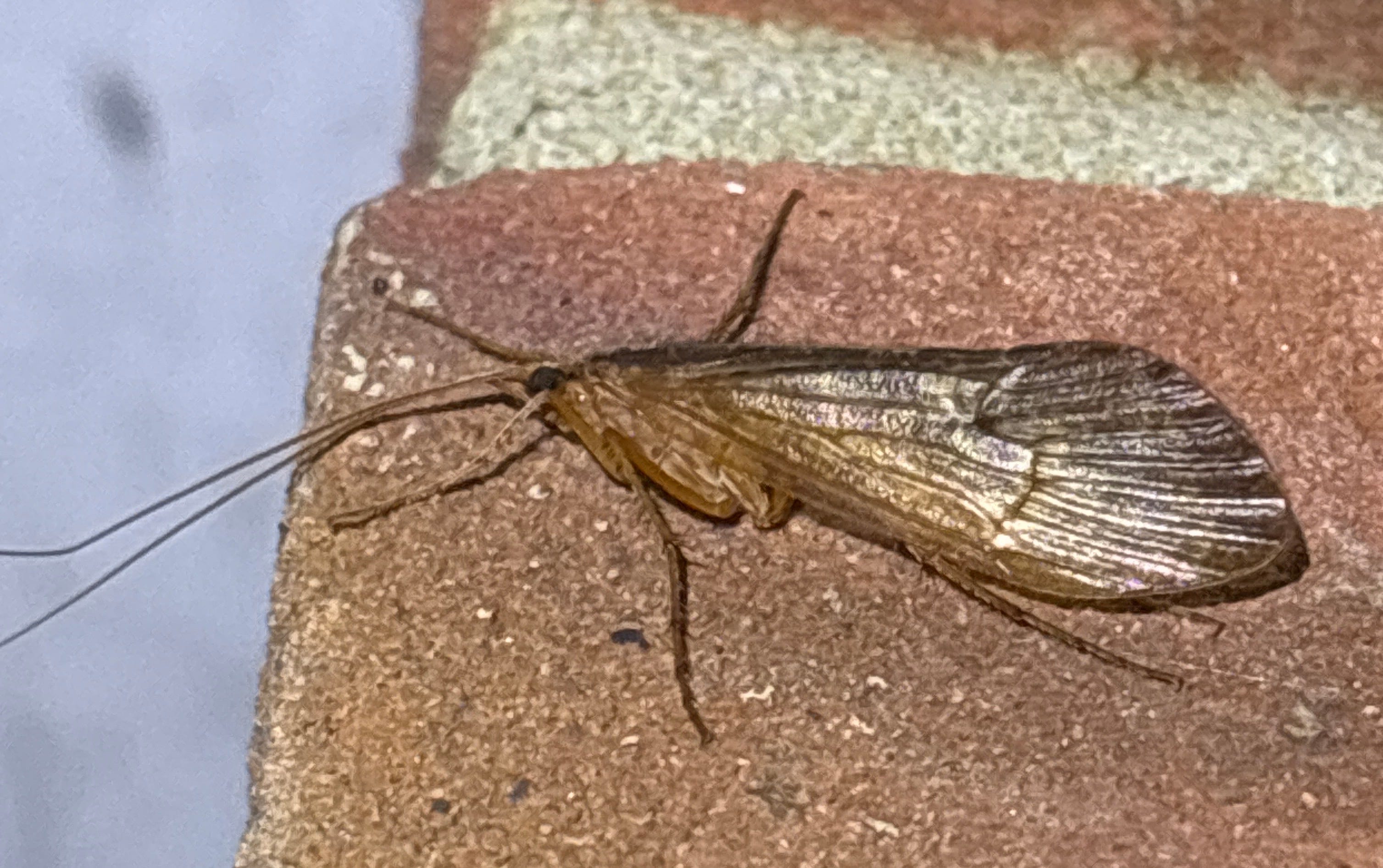
There were no more nights during the week where the omens were all positive; the best option looked like Saturday night (14th), mainly because hardly any wind was forecast. The temperature forecast was a bit on the cool side though, down to 4 Celsius with clear skies, and there was a frost on the car in the morning. The result was 15 moths of 6 species; all the usual suspects for this time of year with nothing that was a new record for the year - well no moths at least, but I did get the first caddis fly of the year, one of the larger ones:
Let’s move on to look at some species seen recently.
The Clouded Drab, Orthosia incerta
Year total to date: 7 (first: 25th February)


Well what a name to be lumbered with! Although it’s possible for it to be a bit on the drab side (eg the second photo in the gallery), this moth is highly variable and some of the forms are miniature works of art, albeit largely in brown and grey. Variation in moths can be divided into different kinds. Species which are aposematic (i.e. carry warning colouration) tend to have little or no variability at all, presumably because predators need to learn that these moths are distasteful, and the less variable they are the fewer moths get attacked while the predators are learning the lesson. But moths which don’t have the protection afforded by being distasteful tend to be more variable, and predators therefore find it more difficult to develop a search image for them. Among these moths are some which have two or more distinct colour forms without much overlap … an example of this which I’ve discussed in earlier editions is the Peppered Moth (here), and there are several which I haven’t covered yet but will hopefully do so before long (for example the Pale Tussock). But the Clouded Drab is a moth in which the variability can be described as continuous; there is a whole spectrum of different forms which overlap and merge into one another. This moth displays one of the most extreme forms of such variability known among moths. The six I’ve shown above don’t cover the whole range - see here for more examples. (Whilst you’re on that web page, don’t miss Section 1.6 for a picture of some sculptured and delicately patterned eggs).
In his book Enjoying Moths1, Roy Leverton discusses within-species variability and makes several interesting observations, including that:
moths which are highly variable (such as the Clouded Drab) tend to be common species, while rare or localised species tend to be more uniform in appearance (although he lists several exceptions);
even when a species is highly variable, with experience it becomes possible to recognize individuals quickly thanks to their ‘jizz’, a birding term which relates to a combination of shape, build, colours and pattern which somehow give one a ‘feel’ for the species. The book was published in 2001, before the advent of ID apps which can now be remarkably good at assigning quite atypical specimens to the correct species; I guess the apps have somehow captured the same idea of the jizz.
The Clouded Drab’s remarkable variability is captured in the species epithet incerta —Latin for ‘uncertain’ or ‘not fixed’. The Dutch common name for the moth also addresses this feature - Variabele Voorjaarsuil (‘Variable Spring Owlet’; ‘owlet’ being a name for moths of this family, the Noctuidae). The French and German names also do this. The species name is another which was bestowed by Hufnagel in 1766. The genus name Orthosia is the same as for the Common Quaker which I discussed last week (here), it’s another of the the group of early spring moths which dominate the trap at this time of year.
The Oak Beauty, Biston strataria
Year total to date: 7 (first: 5th March)
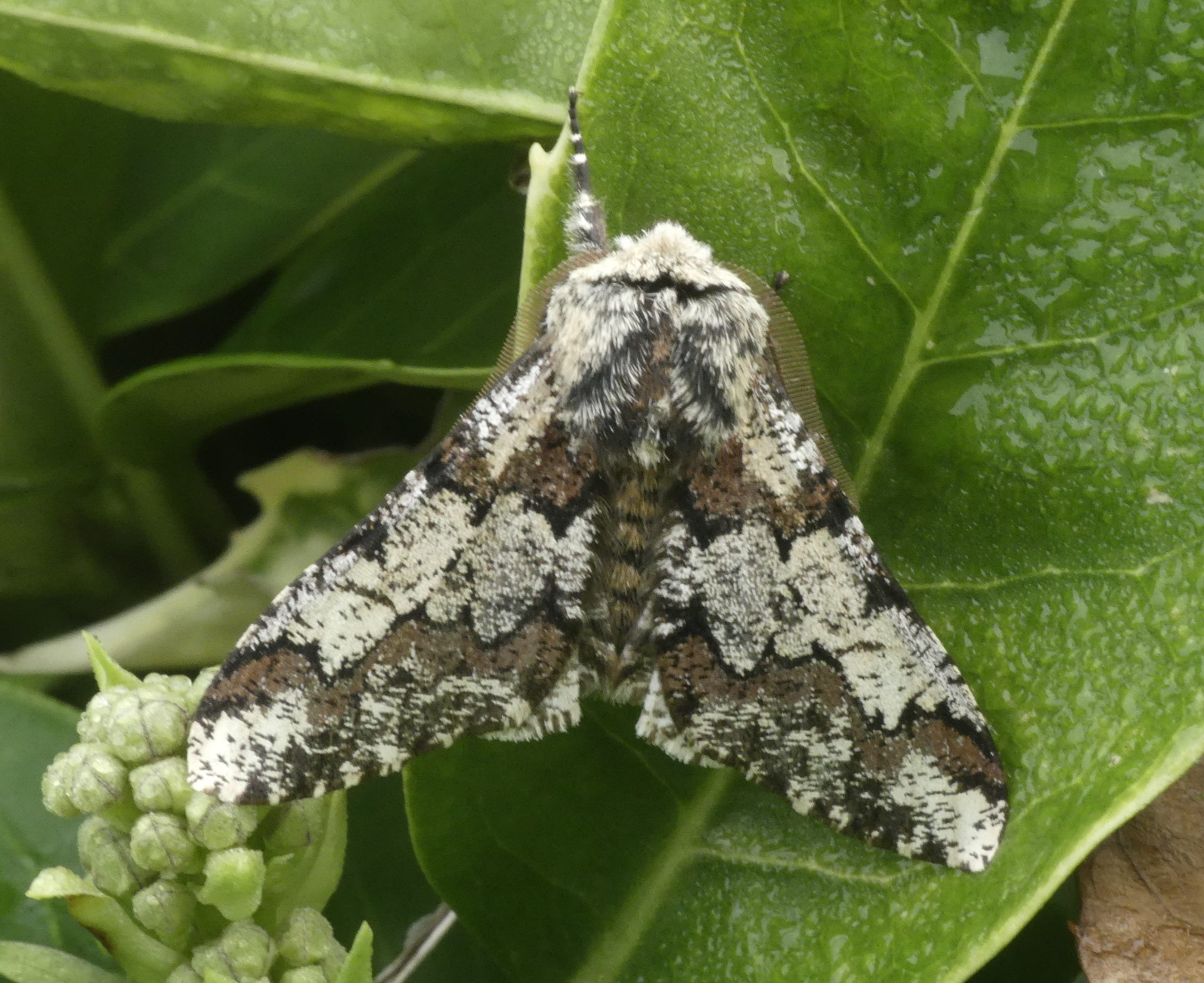
A couple of editions ago I wrote about the loose grouping of moths with ‘Beauty’ in their name; well this is one that is probably most deserving of the term. It’s the largest and most impressive of the moths that are around in early spring; I see them mostly in March but occasionally in February. It’s possible that I might hold a bit of a bias in its favour because I didn’t see my first until my third year of moth trapping (2019), in spite of having read about it and hoping to see one. Then I moved to Hurstpierpoint where I saw another the following year, and in my third year there I saw 12. Then back in Eastbourne again the next year (2023) I saw only two, but last year the total was 13. This is a moth that is said to prefer mature oak woodland, although Chris Manly in Moths of Britain and Ireland says it also occurs in suburban areas. While my records indicate numbers to be increasing at the moment (to get 4 on the same night, as I did on 5th March, equals a record set on 19th March last year), the Atlas of Britain and Ireland’s Larger Moths reports a decline in numbers since the 1970s.
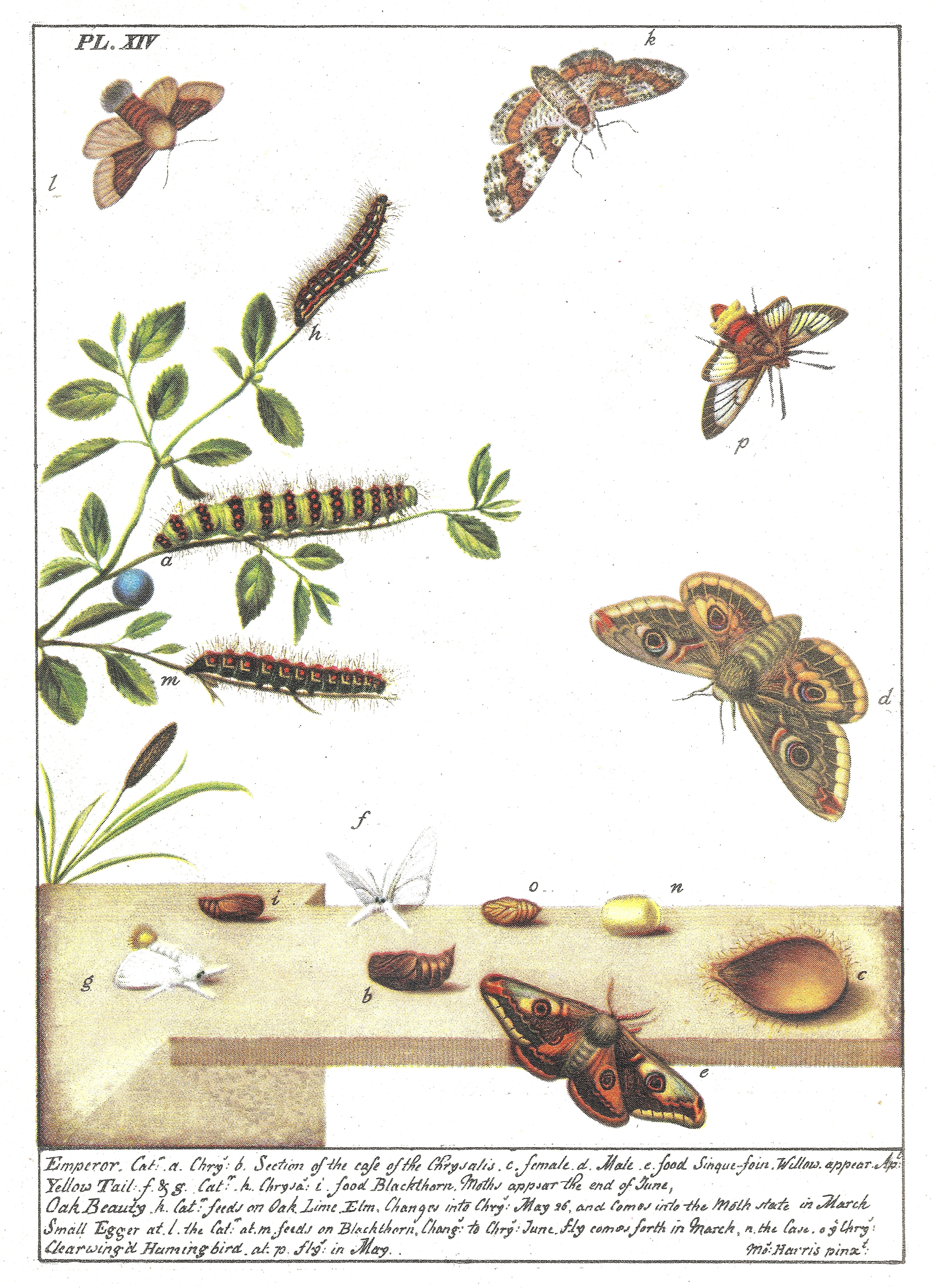
In a recent edition (here) I wrote about some of Moses Harris’s drawings from the 18th century being used in a book by Norman Riley, published in 1944. Here is plate 14 from that book which includes (among other moths) both the caterpillar (at h) and the adult (at k) of the Oak Beauty. According to a note in the text of Riley’s book, these illustrations of the Oak Beauty were not used by Harris in any edition of his book The Aurelian; this was therefore probably the first time that they were published.
This moth is in the same genus as another moth I discussed in an earlier edition - the Peppered Moth, Biston betularia (here). That moth is well known for exhibiting industrial melanism and thereby helping to provide evidence for evolution by natural selection. The variability of the Oak Beauty takes a rather different form from that of the Peppered Moth; whereas the typical form of the Peppered Moth is fairly constant, typical Oak Beauties vary quite substantially. The two brown bands across the forewing vary in width, the ground colour varies between white and greenish-grey and the intensity of the black speckling is also variable. However, unlike the Peppered Moth, a melanic variant of the Oak Beauty is seldom recorded in the UK; it doesn’t seem to be mentioned in any of the standard texts I’ve consulted and the only place I’ve found a reference to UK melanic forms is a few records reported by Colin Pratt in his A Revised History of the Butterflies and Moths of Sussex. Contrarily, melanic forms of the Oak Beauty occur quite regularly in continental Europe and it’s a puzzle as to why they are not more common in UK.
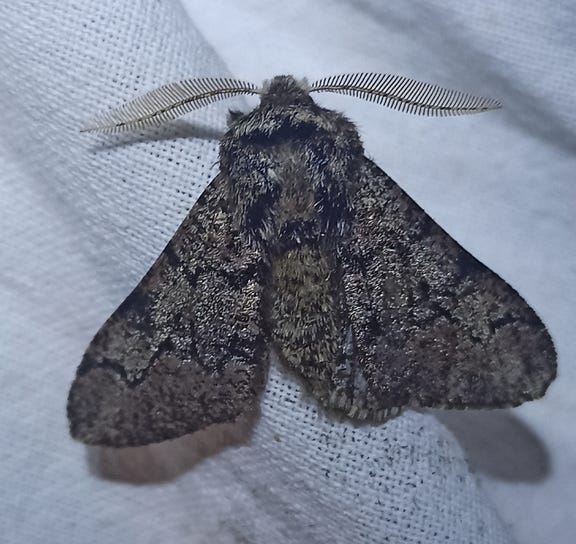
Lepidopterists can think themselves lucky that hybrids occur only rarely in moths; our botanical friends are forever having to cope with interspecies hybrids, which are often commoner that the pure species lines themselves. But it seems that hybrids between these two Biston species, the Oak Beauty and the Peppered Moth, are possible. J.W. Tutt, in British Moths (1902), comments that “Dr Chapman successfully reared some hybrids between these species.” He doesn’t say whether the cross-pairings occurred naturally or were forced in some way, nor does he say whether the resulting moths were fertile.
The species name strataria was first given by Hufnagel in 1767. It’s from the Latin stratum, meaning something spread out, like a blanket or bedspread, hence the derivation of the English word ‘stratum’ meaning a layer. The association with a fabric could be the link Hufnagel used when choosing the word as a name for this moth, and the stripes on the wings could be interpreted as layers. The genus name, Biston, on the other hand makes no reference to the appearance of the moths in the genus … it’s a name from classical mythology and follows a pattern often used by 18th-19th century entomologists. Biston was one of the sons of the Greek god of war, Ares. The following is an excerpt from Wikipedia:
Biston built the city of Bistonia on the shores of Lake Bistonis in Thrace. He also introduced the Thracian practice of tattooing both men and women with eye-like patterns as a magical fetish, in response to an oracle which guaranteed victory against the neighbouring Edonians tribe if so adorned.
Lake Bistonis is now called Lake Vistonida, and lies to the east of Thessaloniki in Greece.
The genus name was selected for these moths by the British zoologist Elford Leach in 1815. There’s a rather intriguing mystery about William Elford Leach (1791-1836), but let’s start with some of the things which are known. He was born in Plymouth, and developed an early interest in marine animals by collecting specimens from Plymouth Sound and along the Devon coast. At the age of twelve he started a five-year medical apprenticeship in Exeter (in those days a medical training was the nearest there was to studying zoology), and while there he collected a centipede in the local gardens which he couldn’t find in his reference books. He recognized it as new to science, and gave it the species name hortensis (‘from a garden’) by which it is still known today.
He moved on to study medicine at St Bartholomew’s Hospital in London, and later in Edinburgh where he completed his medical qualification2. However, he never intended to work as a doctor and in 1813 he took a job as Assistant Keeper (then known as Assistant Librarian) in the Natural History Department of the British Museum.
When he joined the Museum, the collections were in a sorry state and zoological science in Britain had stagnated. Although Linnaeus had established the foundations of zoological classification some 50 years earlier, it was not a perfect system and several inconsistencies had become apparent, especially regarding the major classifications; Linnaeus used only a small number of characteristics to define the major groups, for example, anything with a hard external skin was classified as an ‘insect’, so that included lobsters and centipedes. Zoologists such as Georges Cuvier in Paris had started to redefine these major categories in a more natural way, using a wider range of characters, but British zoologists had resisted such changes. Leach, however, had been reading the French literature are was in contact with the leading French zoologists (in spite of the problems caused by the Napoleonic wars3) and was determined to update the organisation of the Museum’s collections in accordance with these new ideas.
Leach was what we would today call a workaholic. He published numerous papers and books on a wide range of organisms, using these more modern principles - these included crustaceans (on which he was regarded as a principal authority), molluscs, barnacles, fish, frogs, bats and insects (including the moth discussed above). One of his major revisions was to take centipedes and millipedes out of the insect group and create a whole new subphylum for them, the Myriapoda (or the myriapods). He also served on the Council of the Linnean Society, and became a Fellow of the Royal Society at the age of 25.
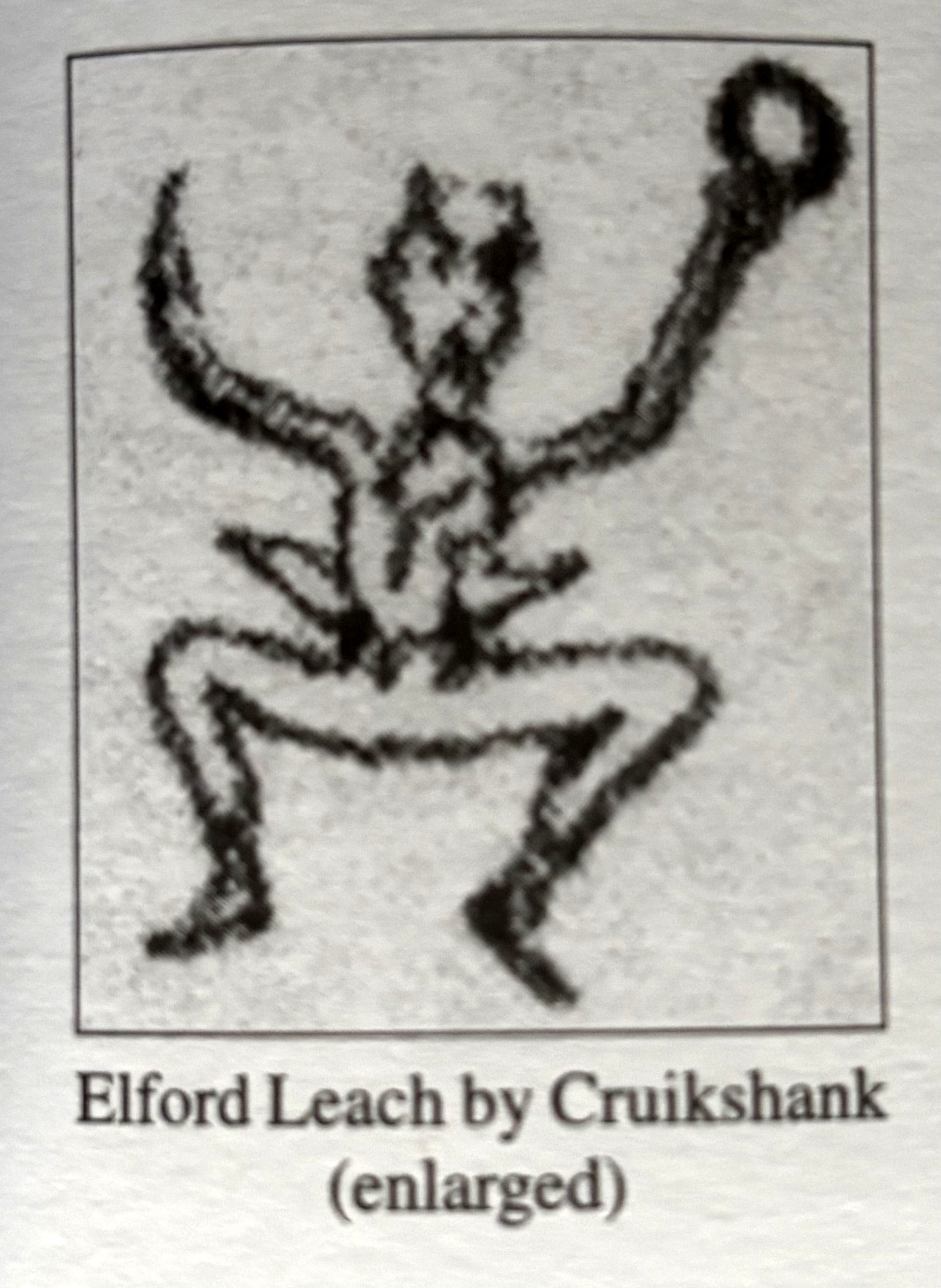
If you Google ‘William Elford Leach’ you will find a number of images which purport to be portraits of him. However, according to the book I detail below (under ‘A note on sources’), this is the only one that can be confirmed as genuine:
All this relentless work took its toll; in 1821 Leach suffered a nervous breakdown and was forced to resign from the Museum. The trustees granted him an annuity. He spent time in care and with friends, and in 1824 his older sister Jenny took him to Nice, where they stayed for six months; it seems Leach spent much of his time there out collecting insects. They then spent the next several years travelling in France and Italy, still collecting insects (Leach donated his collection to the British Museum). By early 1836 they were in Genoa, but there was an outbreak of cholera; they moved out of the town in an attempt to avoid it but Elford didn’t manage to escape the disease and died in August of that year, at the age of 45, leaving his sister Jenny to commission a memorial stone for him.
In spite of his short career, Leach is remembered today through the numerous scientific names he created and for quite a number of species which are named after him. But his major contribution to science is that he almost single-handedly modernised British zoology after its stagnation during the long wars with Napoleonic France. It is said that he laid the foundations on which Darwin and Wallace were able to build the theory of evolution by natural selection. One of Darwin’s mentors, John Stevens Henslow, had while a teenager been tutored by Leach in zoology.
And the mystery? Well it concerns Leach’s choice of the genus and species names he created. He sometimes embedded the names of women into these, and in particular he seemed to have a fascination with ‘Caroline’ or the Latinised form ‘Carolina’, of which he used several anagrams: Cirolana, Conilera, Rocinela to name but a few. But there’s no record of who this woman was, or what (if any) was her relationship with Leach, who never married. But whoever she was, she’s achieved immortality by having several crustaceans named after her!
A note on sources
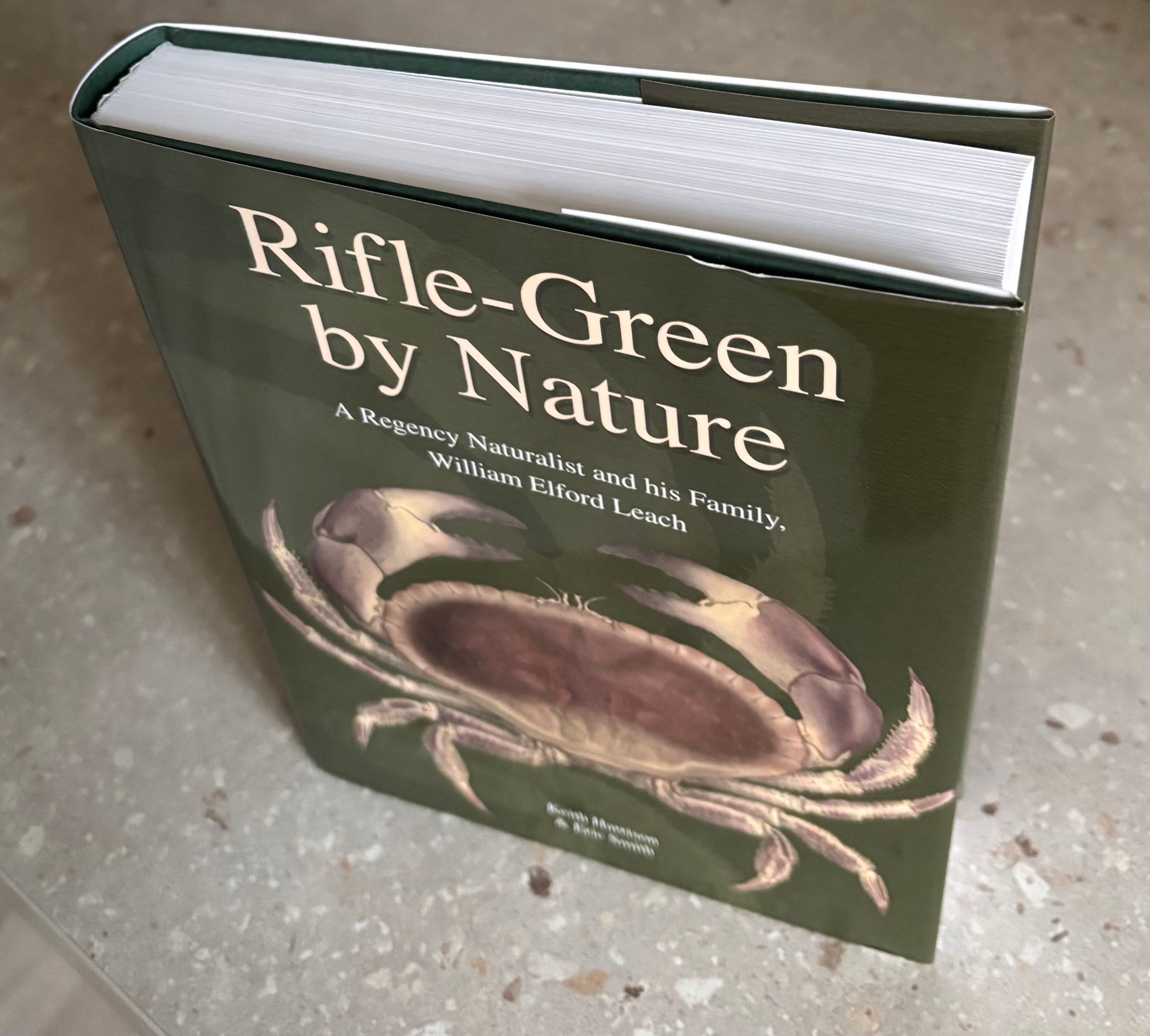
Various short(ish) articles on Elford Leach can be found through a Google search, and the above notes were based on these articles. However, in 2008 a biography was published of Elford and other members of his family, Rifle-Green by Nature, by Keith Harrison and Eric Smith4. The articles I used seem mostly, maybe entirely, based on this book. I had a look around to see whether I could find a second-hand copy, and discovered that Postscript Books are selling new copies (hardback) for £10.99, reduced from £32.50 (here). If you are lucky, as a new (UK) customer you might even get an offer of free postage (unfortunately I had already ordered mine through a different agent when I discovered that!). I’ve had my copy only a couple of days now, so haven’t had a chance to do more than just dip into it yet, but it looks a well-written, thoroughly researched and well-produced book; 500 pages of text and another 100 or so pages of appendices, references and a very detailed index.
That’s it for this week. The next issue is scheduled for Tuesday, 24th March
This newsletter will always remain free. However, if you feel you want to show your appreciation by making a financial contribution you can use the button below to take you to a website where you can do so. I will donate any money I receive through this route to a charity, most likely Butterfly Conservation but other more local wildlife charities might also qualify. Absolutely no obligation, but many thanks if you do.
I mentioned this book a couple of editions ago, saying that I was considering buying a second-hand copy but couldn’t find one for less than £30. One of my subscribers (and fellow moth-ers) Clive Jones commented that it was one of his favourite moth books and well worth the price, so I ordered one. And although I’d only seen the author described as a ‘Scottish lepidopterist’, it turns out he lived for over 20 years in Sussex! And also he’s as much an ornithologist as a lepidopterist.
It seems Leach had set himself a target of obtaining his MD by his 21st birthday, but he hadn’t put in sufficient time at the University in Edinburgh in order to be awarded that qualification from there. However, St Andrews University wasn’t so strict, and would confer the qualification simply on the basis of written recommendation from recognised authorities. So Leach went down this route and managed to meet his target with just a day or two to spare.
An older brother of Elford, Jonathan, served in the British Army during these wars.
The book was actually written by Keith Harrison, but a lot of the research on which it is based was done by Eric Smith, who died in 1990.
The people you write about are as interesting as the moths! Thank you!
Very fascinating and informative article as always Dennis! The section about the Oak Beauty reminded me of the rare form named berus I was lucky enough to encounter last year in my Plumpton garden. Colin informed me that "It's never been reported from Sussex before - that is, since the first adults were caught in the county during the 1850's."
A photo can be seen on https://greencrossnature.org.uk/Photos/PhotosModel.