
Welcome to the Moth Report. If you’re a new reader of this newsletter, some background about my moth trapping can be found here, together with an index which links to all the species previously discussed.
Report for 5th to 18th January
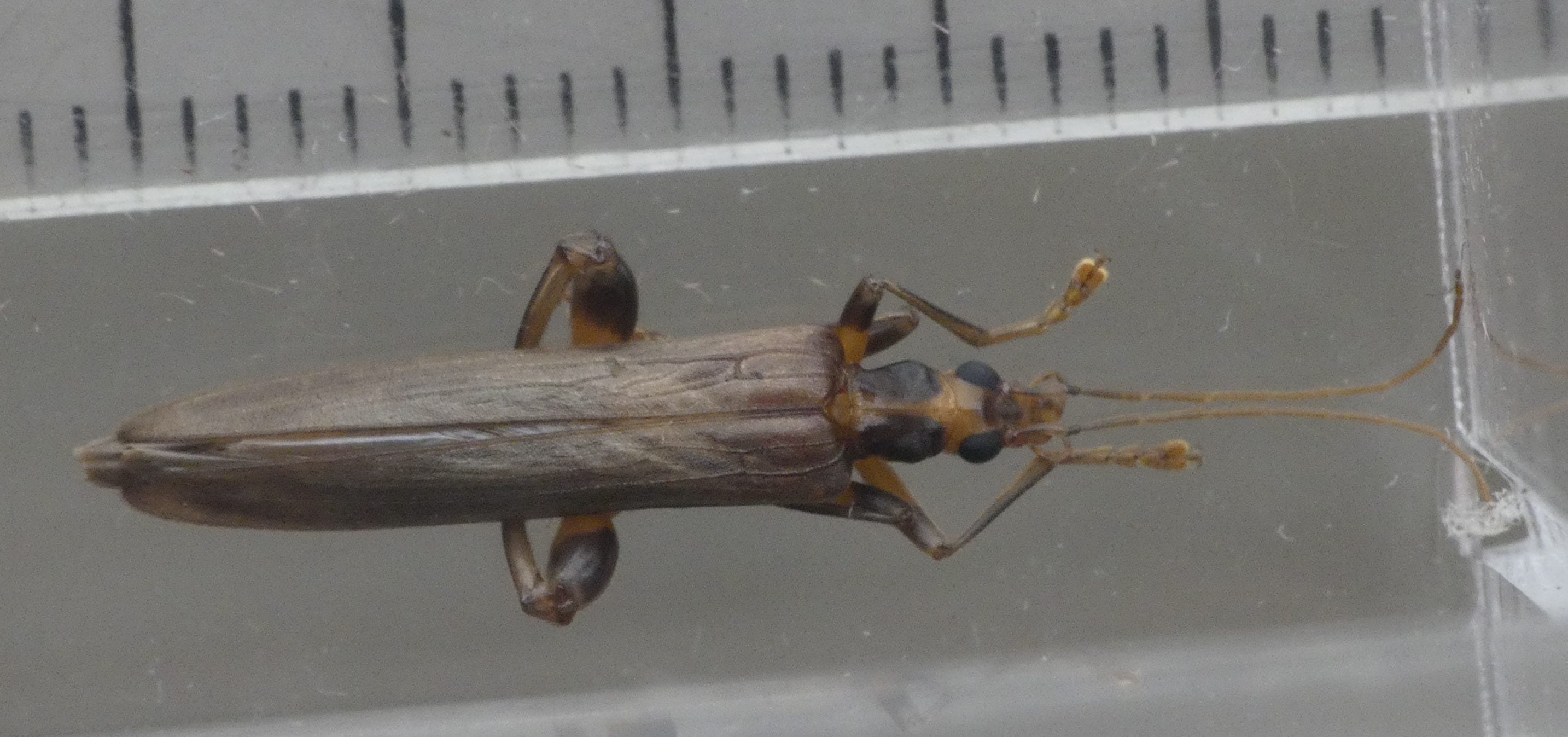
The first trap of the year was 12th January; this relatively mild night was damp but with a bit of a breeze and (apart from 11th January) the first night of the year when the temperature looked mild enough for a few moths to be out and about. However, none visited the trap so the 2026 count is still to get off the ground. There were a few tiny midges around, and one beetle, Oedemera femoralis. This is in the same genus as the more commonly seen Thick-legged Flower Beetle, O. nobilis, but doesn’t have the iridescent green colouring (or quite such thick legs).
Then the night of the 16th was forecast to be quite mild with not too much breeze, so I put the trap out again … not quite a blank this time, just one Winter Moth! However that’s quite appropriate because I’d already selected this to be one of the featured species for this edition.
So, let’s move on to look a couple of moth species seen in December/January.
The Grey Shoulder-knot, Lithophane ornitopus
2025 total: 2 (latest 19th December)
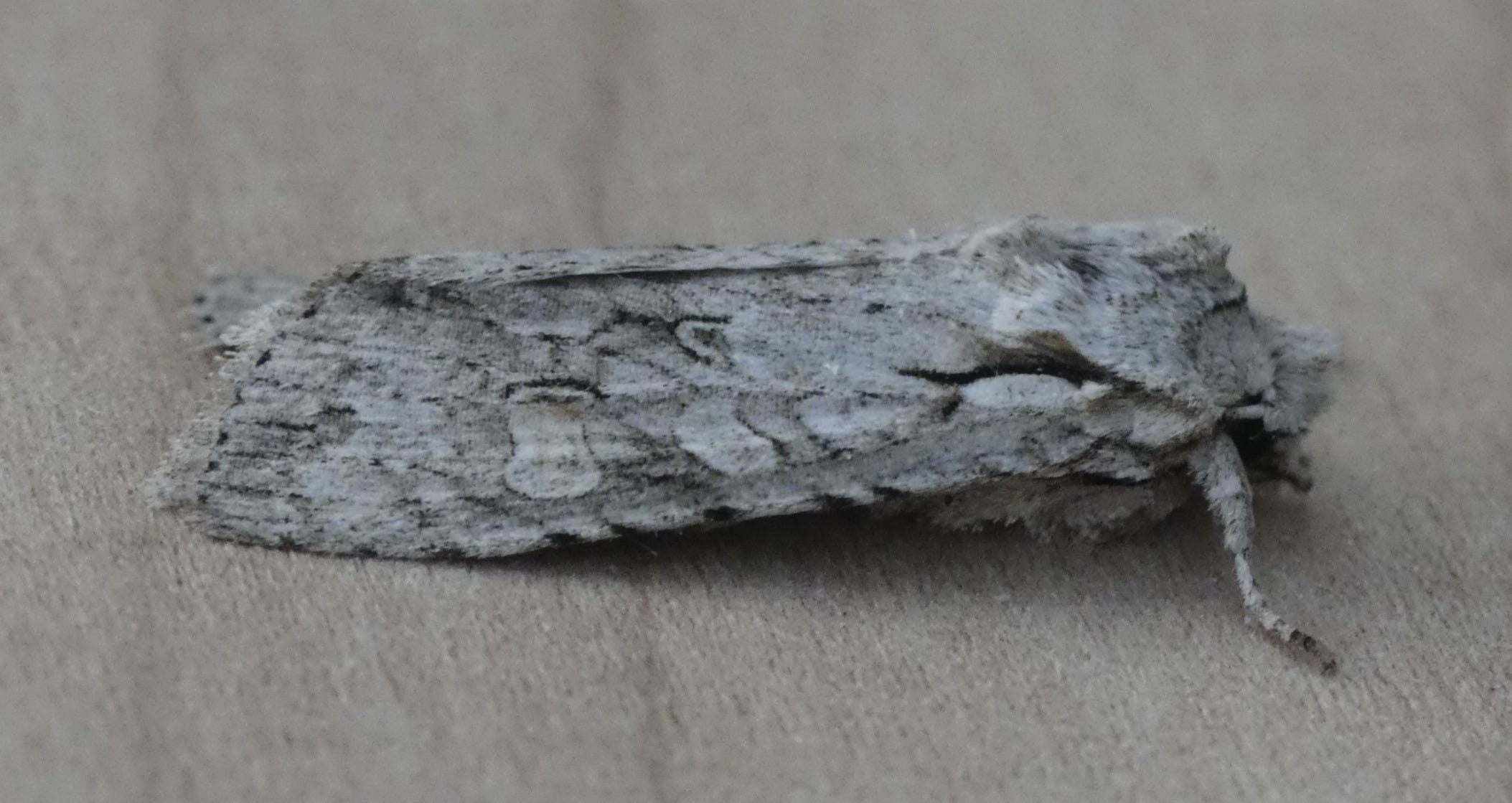
Prior to 2025 I’d seen this moth only twice (once in each of 2022 and 2024), so to see two in one year was rather unexpected. However, this is a moth that overwinters as an adult - they emerge in autumn, hibernate and then reappear in the spring. So it actually makes more sense to count the number seen per generation rather than per year - all three of my previous sightings were in the spring so I’ve in fact never seen more than one per generation and the two seen in 2025 consisted of one of the 2024/5 generation and one of the 2025/6 generation.
There’s a note in the Waring and Townsend Field Guide to the Moths of Great Britain and Ireland that the moth ‘mates in spring’. So it would seem that when the adults emerge in the autumn they abstain from any reproductive activity and concentrate on just feeding and finding somewhere safe to hibernate, and wait until they come out of hibernation in the spring to find a mate and for the females to start egg-laying. It’s unusual among moths to have this long time delay between eclosure (emergence from the pupa) and mating, although there is another species in the same genus (the Pale Pinion, Lithophane hepatica) which has a similar life cycle.
It’s interesting to compare this with another closely related species, Blair’s Shoulder-knot (Lithophane leautieri) which also emerges as an adult in the autumn, but in this case it does not hibernate but mates in the autumn and overwinters in the egg stage. For this species though the foodplant is evergreen, whereas the Grey Shoulder-knot and the Pale Pinion have deciduous foodplants, so there’s no risk of the eggs hatching before there are any leaves for them to eat.
One of the other comments about the Grey Shoulder-knot that crops up in several of the books is that the caterpillars are well known for being cannibalistic! It’s not clear to what extent this happens in the wild, or whether it’s just something that has been observed when the caterpillars are kept in overcrowded conditions in captivity.
The genus name Lithophane comes from the Greek lithos (λίθος) meaning ‘stone’ and phainein (φαίνειν) meaning ‘appearing’, referring to the colour of the forewings. The species name ornitopus is also from the Greek, ornis (ὄρνις) for ‘bird’ and pous (πούς) for ‘foot’. This name was given to the species in 1766 by Hufnagel (whom I wrote about here) and presumably relates to the black anchor-like marking at the base of the forewing; the same marking that gives rise the English common name ‘shoulder-knot’.
In the 1820s the genus name Lithophane was also adopted as an English noun, used to describe a thin plaque of biscuit (unglazed) porcelain carved (or moulded) with varying thicknesses, so when a light was shone through the porcelain sheet the differing thicknesses resulted in differing light intensities, which formed an image. Although there is no direct link to the moth genus, the word is derived from the same Greek roots; the image appeared through what in reflected light looked like just a piece of stone.
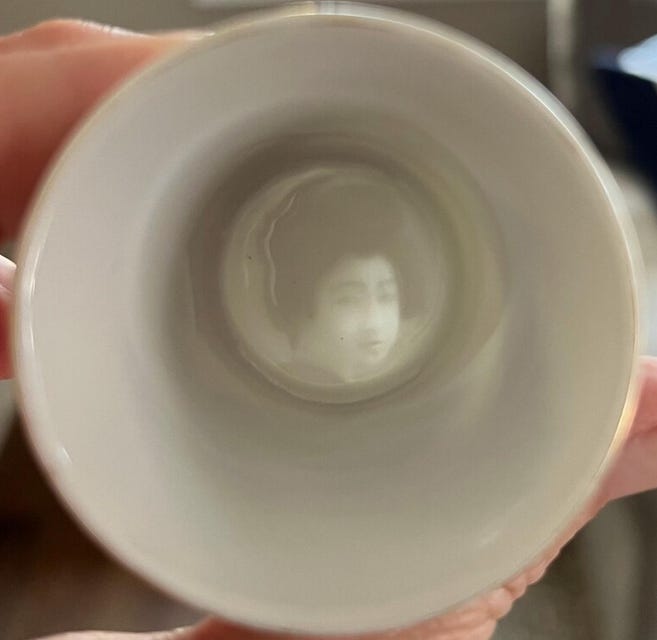
Manufacturing lithophanes was a difficult process; most of the attempts warped or cracked during firing because the porcelain was so thin. Although invented in France, the most famous producers were in Germany and the lithophanes were often called ‘Berlin transparencies’ in England. They were popular for use in lamp shades and candle shields, where the image appeared only when the light was on. Another popular use was in the base of drinking vessels, where the image did not appear until the cup was drained and held up to the light. Japanese manufacturers frequently used images of Geishas in this manner, as seen in this sake cup:
Today, lithophane has seen a massive revival thanks to 3D printing, which can easily replicate the varying thicknesses using plastic instead of the original porcelain. If you search for ‘lithophane light box’ on etsy.com or similar you’ll find lots of options where you can submit your own photos to be 3D-printed as a lithophane; I’m rather tempted to order one in which the images are all moths of the genus Lithophane, but I guess the pun would be lost on most people so I probably won’t get around to it. But this is what Gemini thinks it might look like:
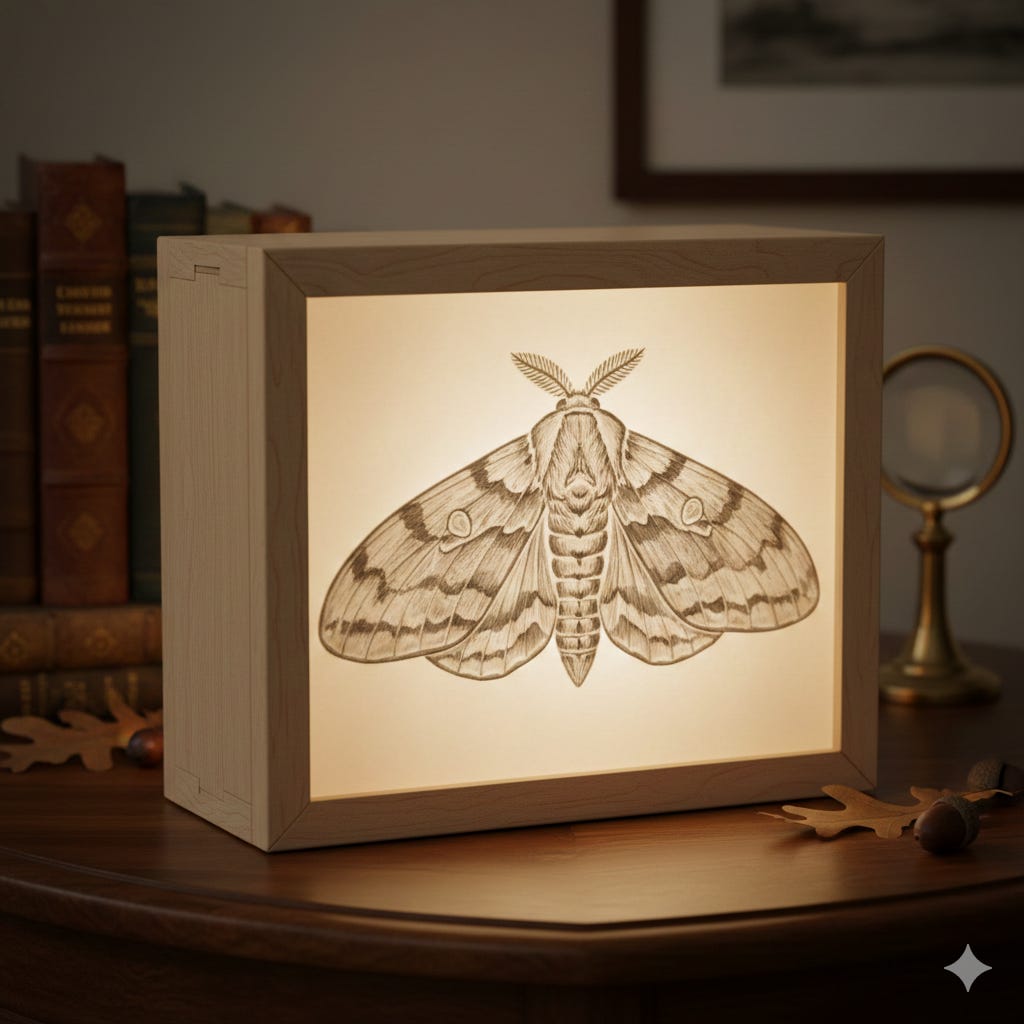
(I actually had three goes at getting a more realistic moth picture, and tried Copilot as well, but without any convincing success).
The Winter Moth, Operophtera brumata
2025 total: 1 (12th December)
2026 total to date: 1 (16th January)
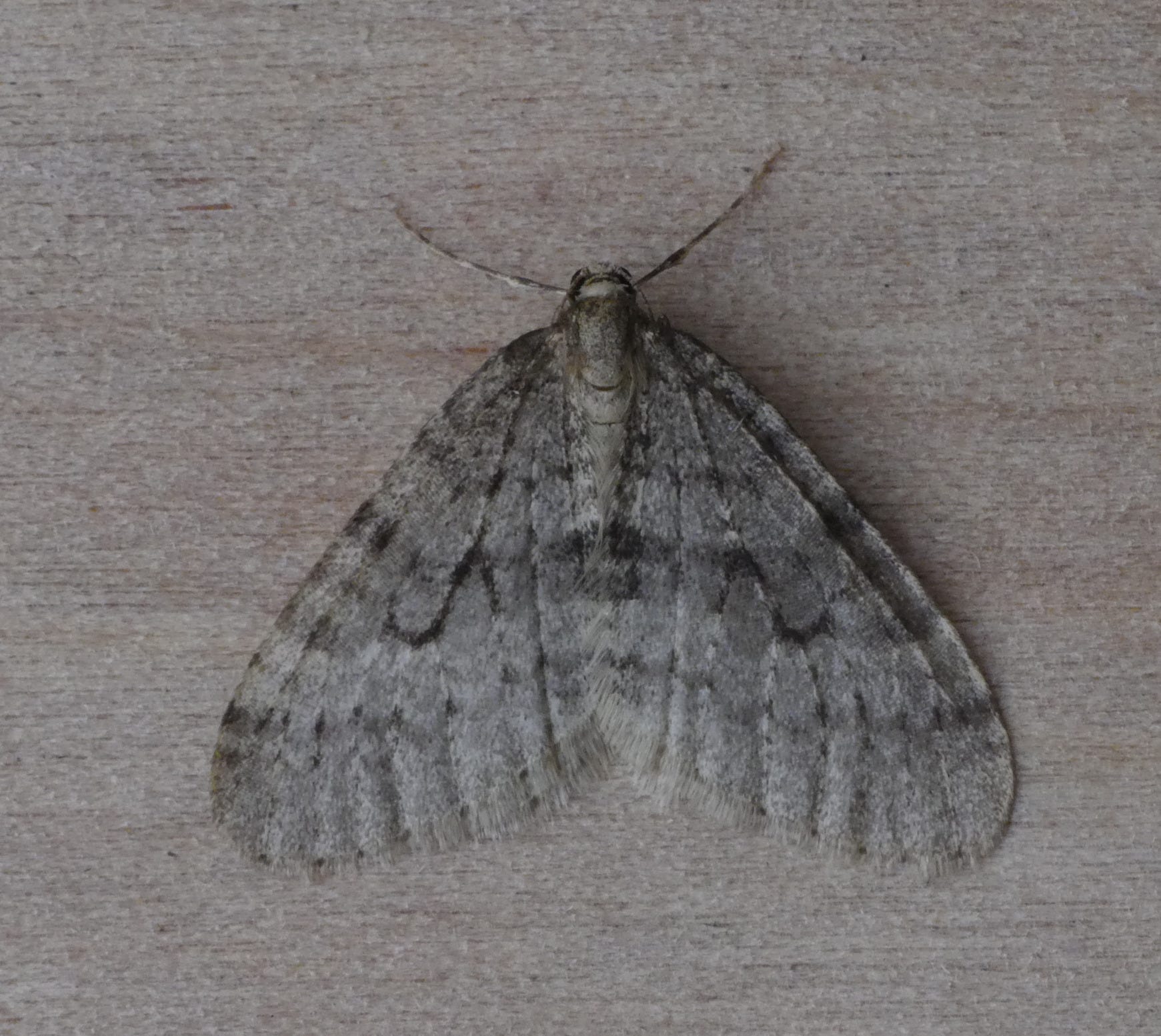
Strictly speaking this moth should be described as ‘agg’1, because in fact there are two very similar species which can’t reliably be separated from photos. The other is the Northern Winter Moth, Operophtera fagata. From those specimens where separation has been done, it would seem that the Winter Moth is commoner and more widespread than the Northern Winter Moth, and the Winter Moth is described as being ‘common throughout the UK anywhere near trees and shrubs’. As far as Eastbourne is concerned, though, that’s not been my experience - I’ve never seen more than two in the same year. I did see rather more when I was in Hurstpierpoint in West Sussex - up to eight a year.
This is clearly not everyone’s experience; when I mentioned having seen this one in one of my December Moth Reports (here) I had a comment from a subscriber in East Devon, Dr S E Jones, saying that on the day before the report was published she had had no fewer than 13 Winter Moths to her lighted windows by early evening! So clearly they can be very common. The Atlas of Britain and Ireland’s Larger Moths, though, reports that ‘the moth’s abundance has decreased substantially since 1970’.
Such a decrease is concerning because eggs laid in December or January hatch into caterpillars at budbreak, and great tits and blue tits time their breeding so that the peak demand for caterpillars to feed their young coincides with the time when Winter Moth caterpillars are active and they are estimated to provide between 40% and 70% of the caterpillar biomass available to the tits. To quote from the Butterfly Conservation website:
Great tits and blue tits feed their young on Winter Moth caterpillars and will time their breeding to coincide with the moth’s lifecycle.
So smaller numbers of Winter Moths means fewer blue tit chicks will survive. And that’s important to other species as well of course … I once heard blue tit chicks and fledglings described as ‘Nature’s little biscuits’! Last year, however, the blue tits that nested in my garden managed to successfully rear their whole brood (although that was not the case the year before).
In a recent post (here) I discussed some of the adaptations that moths have evolved to cope with low temperatures. One of these methods concerns the incorporation of a sort of anti-freeze in their tissues, and I recently found a website which includes a discussion of this in more detail, by April Joy Jovita (here). This is (part of) what it says:
Deep within the cells of cold-weather moths lies one of nature’s most sophisticated survival mechanisms: antifreeze proteins. These remarkable molecules work like microscopic bodyguards, preventing ice crystals from forming in the moth’s body fluids. Unlike the antifreeze in your car, these proteins don’t lower the freezing point dramatically—instead, they bind to tiny ice crystals and stop them from growing larger. The winter moth (Operophtera brumata) produces these proteins in such high concentrations that they can survive temperatures that would instantly kill tropical species. Scientists have discovered that these proteins are so effective, they’re now being studied for potential applications in organ preservation and even ice cream manufacturing.
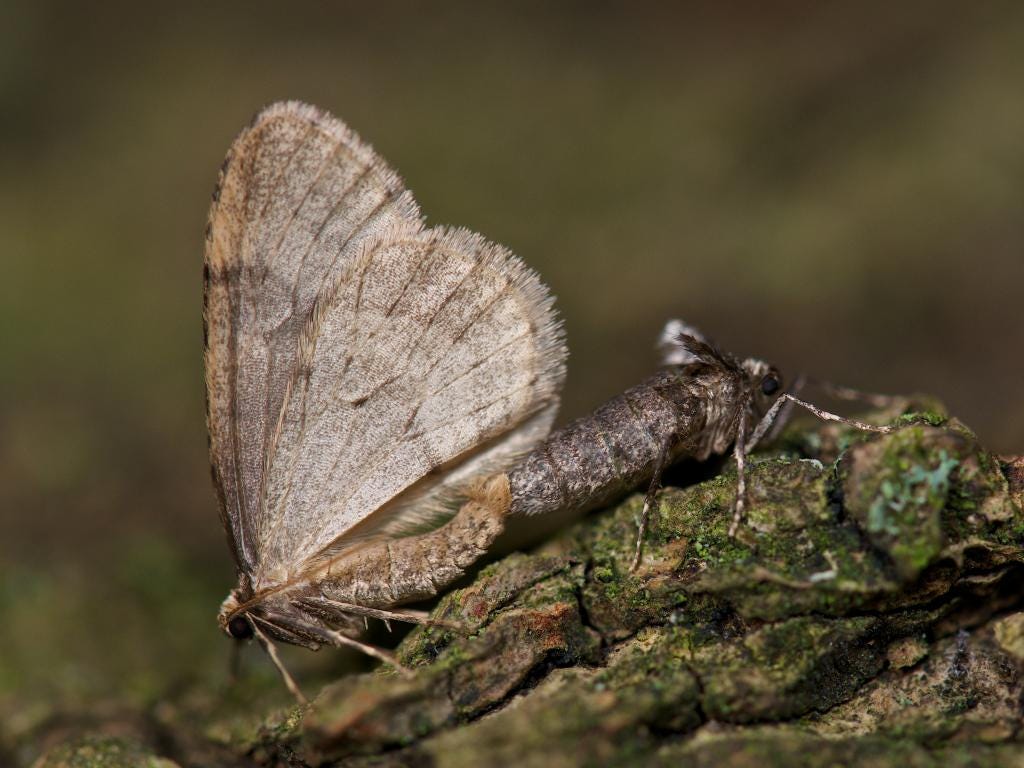
Like some other winter-flying moths I’ve discussed recently, it’s only the male Winter Moth that flies; the female has only rudimentary wings, as you can see in this photo of a mated pair.
As I mentioned in the post about the Scarce Umber (here), having flightless females makes it difficult for populations to disperse; it all has to be done on foot. Except that for some moths (like the Vapourer, discussed here) the caterpillars have found another way to disperse, which is by ‘ballooning’ - spinning silken threads and letting the wind transport them. Well the Winter Moth is one of those that has learnt to use this trick. The danger, of course, is that the young caterpillars will end up landing on something they can’t eat. In the case of the Winter Moth this danger is to some extent mitigated because its larvae will eat a wide range of different plants - almost any broad-leaved tree or shrub, heathers, and some other species as well. They can sometimes be so numerous as to become a pest, defoliating plantations and orchards.
Once fully fed (late May or June), the Winter Moth caterpillars drop to the ground and bury themselves 1 to 5 cm deep in the soil to pupate. They remain as pupae in the soil until they eclose (emerge from the pupa) in late autumn or early winter. They then claw their way to the surface, and the females find the nearest tree trunk and start climbing and releasing their pheromones to attract males. Once mated, the females continue their climb into the tree and lay their eggs in crevices in the bark, or on twigs, where the eggs overwinter and hatch in spring.
The Winter Moth and its Population Dynamics
It would be remiss of me to leave this account of the Winter Moth without saying something about its role in helping to establish the scientific discipline of population dynamics. To do that, I need to say a bit about an area of woodland called Wytham Great Wood, near Oxford, England (its website is here). The site occupies about 1,000 acres and was donated to the University of Oxford in 1942. Since then, it has been used for numerous scientific studies. As well as the Winter Moth, research has focused on badgers, great tits, tawny owls, and bats - especially on the interactions between different populations - and Wytham Wood is often described as one of the most intensively studied pieces of woodland in the world. I have my own story relating to this wood, but since it’s not germane to the Winter Moth I’ve relegated it to a footnote2.
The research programme on the Winter Moth was led by the Hope Professor of Zoology at the University, George C. Varley (1910-1983). Varley studied entomology at Cambridge, and won the Frank Smart Prize for zoology in 1933. He received a Ph.D. for his studies on “The Natural Control of the Knap-weed Gallfly“ conducted from 1935 to 1938. During World War II, he worked on radar installations on the coast where he was a colleague of the ornithologist David Lack (whom I’ve already mentioned in my footnote relating to Wickham Wood). Indeed, it was as a result of wartime discussions between the two that Lack developed the interest in population ecology which steered much of his future research. In 1945, Varley became a reader in entomology at King’s College, Newcastle upon Tyne and in 1948 he was appointed Hope Professor at Oxford. In 1949, he was best man at David Lack’s wedding.
In his studies of the Winter Moths in Wickham Wood, begun in 1950, Varley’s principal collaborator was another British entomologist, George Gradwell. Some of the methods they used are described by Tim Blackburn in his book The Jewel Box: How Moths Illuminate Nature’s Hidden Rules:
They set traps on the trunks of five oak trees to catch females on their ascent, so that they could calculate the adult population size. They dissected some of their catch to assess their egg loads, and so estimate how many eggs would be laid by the population. They set more traps to catch the caterpillars as they dropped, and dissected them to discover how many had parasitoids. How their estimates of numbers changed across all these life stages allowed them to census3 the Winter Moth population, to identify where death happened, and to infer the major causes. They repeated this painstaking effort for nineteen years. Time-consuming indeed!
Varley and Gradwell’s research enabled them to assess the rates of mortality at different stages in the moth’s life cycle:
Eggs to early larvae (high but variable mortality);
Early larvae to late larvae (moderate mortality);
Late larvae to pupae (low to moderate mortality);
Pupa survival in soil (high mortality);
Pupae to adults (moderate mortality);
Adults to eggs (variable mortality).
By comparing results between years, they showed that mortality was strongly density-dependent during the pupal stage, with higher density being associated with higher mortality. Thus the overall population size was self-regulating, and this was one of the first practical demonstrations of what had previously been primarily theoretical research. This led to the establishment of population dynamics as a scientific discipline, and the pubication of a book Insect Population Ecology: An Analytical Approach by Varley, Gradwell and Hassell (first edition 1974).
More recent work has indicated that population regulation in the Winter Moth operates at several stages of its life cycle, and the process is not dominated by predation during the pupal stage as Varley and Gradwell’s results had indicated.
That’s it for this week. The next issue is scheduled for Tuesday, 3rd February.
This newsletter will always remain free. However, if you feel you want to show your appreciation by making a financial contribution you can use the button below to take you to a website where you can do so. I will donate any money I receive through this route to a charity, most likely Butterfly Conservation but other more local wildlife charities might also qualify. Absolutely no obligation, but many thanks if you do.
An abbreviation of ‘aggregate’, i.e. a group of species rather than a single species.
I’ve mentioned my late friend Professor Denis Owen before in these notes (here). As a student at Oxford Denis undertook research into the great tits of Wytham Wood, supervised by the renowned ornithologist David Lack. Denis told me the story of how he drafted a paper on his research, including a table which he entitled ‘weights of great tits’, which was submitted to Lack for approval. One of Lack’s comments was to the effect that there was no way of knowing whether the same great tit had been weighed more than once, and the table should more accurately be described as ‘weighings of great tits’. At the time Denis told me this story I hadn’t started my training as a statistician, but it’s always stuck in my mind as illustrating the way double counting can cause statistical results to be misleading!
I don’t think this word was ever meant to be used as a verb!
Fascinating report, as ever, thank you and beyond thrilled to be mentioned. I thought of you the other morning when a Winter Moth was sitting on the kitchen table, seemingly waiting for breakfast, obviously having flown in the night before. Despite the wet and wind (or beginning to think because of it) there are one or two Winter moths on our windows most evenings by 7pm. On 7th January there were 6 and on 11th and 18th, 4. We are on the edge of a conifer wood that includes plenty of deciduous trees. We do have a lot of great tits and blue tits. (I feel I should add that I don't know why my Substack username is so formal. My first name is Sarah. I will change it but I will wait awhile - I don't want to mess up your report. Best wishes.)
The Varley and Gradwell study fascinates me - nineteen years of painstaking field work to establish population dynamics as a scientific discipline. It's kinda mind-blowing how that level of commitement to one species generated such foundational insights. The antifreeze protein detail is also brillant, especially knowing those proteins are now being studied for organ preservation. Nature's solutions always seem more elegent than our attempts to engineer them from scratch.