
Moth Report #39
Summary for 2025, updates on Light Brown Apple Moth, Rusty-dot Pearl and Balsam Carpet
Welcome to the Moth Report. If you’re a new reader, some background about my moth trapping can be found here, together with an index relating to all the species previously discussed.
For this first Moth Report of 2026, the format and content is different from usual. In place of the discussion of two or three species seen recently, there’s a section giving some summary statistics for 2025, followed by updates on some of the species previously discussed.
Report for 22nd December to 4th January
Most nights during this period have been rather too cold, with forecast minima around 3 degrees Celsius, to make it worth putting the trap out. An exception was 27th December, when the forecast minimum was 7 degrees Celsius, so I took a chance; just one Common Plume was the result.
Since then the nights have again been too cold to make it worth putting the trap out, so no results yet for 2026!
Statistics for 2025
The total number of nights I ran the trap was 90, fairly typical for the last three years (earlier on I was averaging around 110). The total catch was 5779 moths of 408 species. Both these numbers are records; my previous highest numbers were 5326 moths (in 2019) and 398 species (in 2022). This is presumably associated with the warm temperatures and prolonged dry spells experienced during the year.
The 2025 year completes three years in my current Eastbourne garden, and the total number of species for this garden is now 515. If I add in the three years data (2017-2019) from my previous Eastbourne garden the species total is 645. Then if I add in the three years (2020-2022) in Hurstpierpoint the total is 745 species (so still quite a way to go to get to 1000!).
In spite of the record number of species recorded during the year, the number of species new to me was only 28, well down on previous years. Of course, finding new species gets more difficult with each additional year, but hopefully 2026 will produce at least as many.
The most numerous species for 2025 are tabulated below:
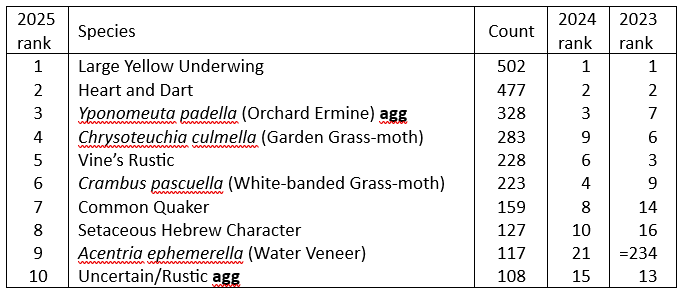
It was no surprise that the Large Yellow Underwing and the Heart and Dart retained their places as first and second in the list respectively, in both cases with counts exceeding their 2023 and 2024 totals. Of particular note is the Water Veneer, for which I had only one record in 2023, tying for 234th place with lots of other species that year. This is an aquatic species, and one of the first things I did in the garden on moving to my current house was to instal a wildlife pond. So it’s interesting to speculate whether the increase in frequency for this moth is associated with the new pond!
At the other end of the spectrum, there were 132 species with only a single record during 2025. This is highest it’s been in Eastbourne, although somewhat higher values were observed when I was in Hurstpierpoint. I also made a list of species which hadn’t appeared at all during 2025 but which I’ve seen several times previously in Eastbourne. Among the macros in this list are the Blood-vein (the second year running this has been missing), the Gem, the Burnished Brass (very sorry to have missed this one, it’s one of my favourites), the Marbled Beauty (not seen this since 2020!), the Chestnut and the Satellite (another one missing for the second year running).
My favourite ten species for 2025
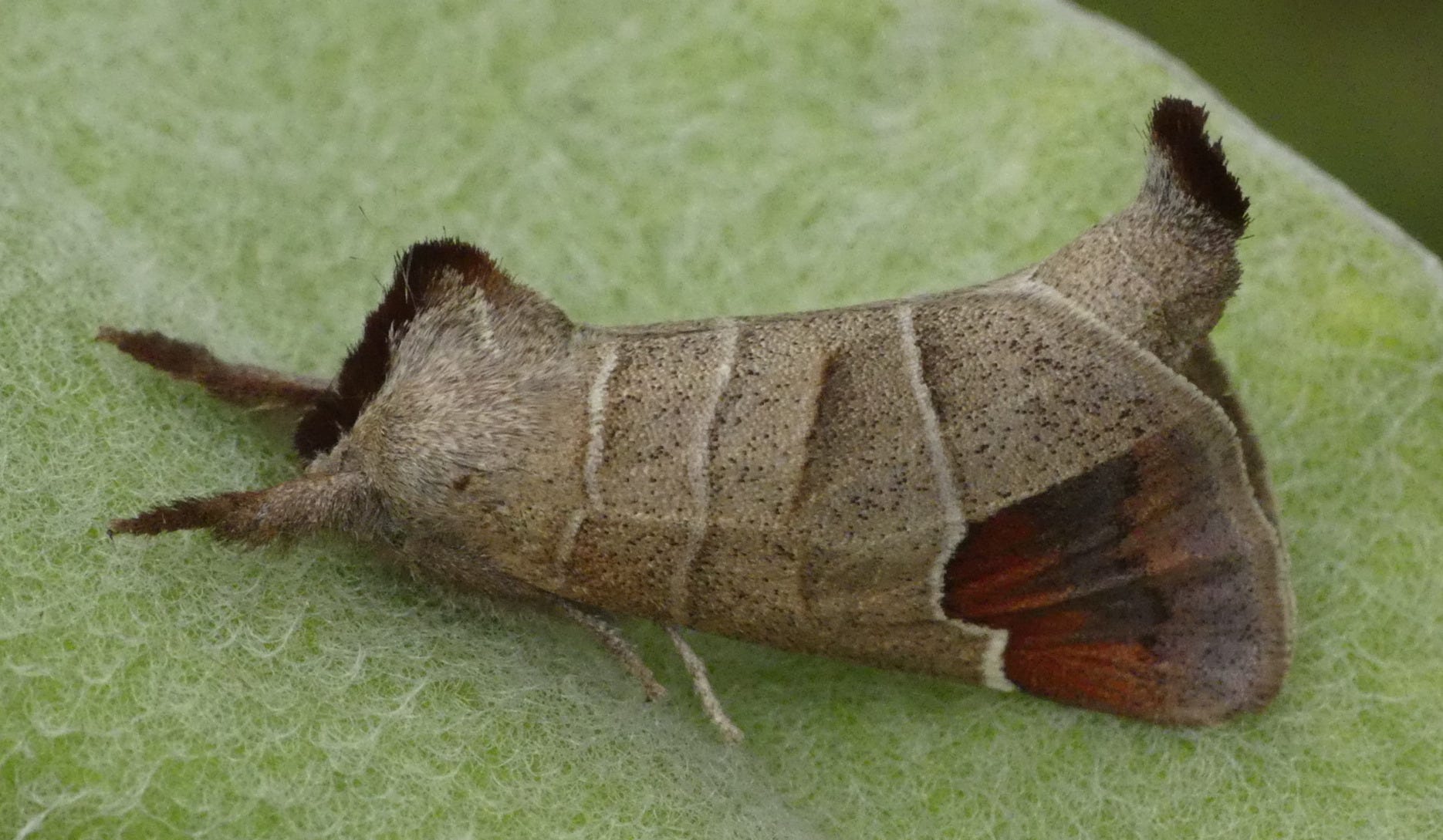
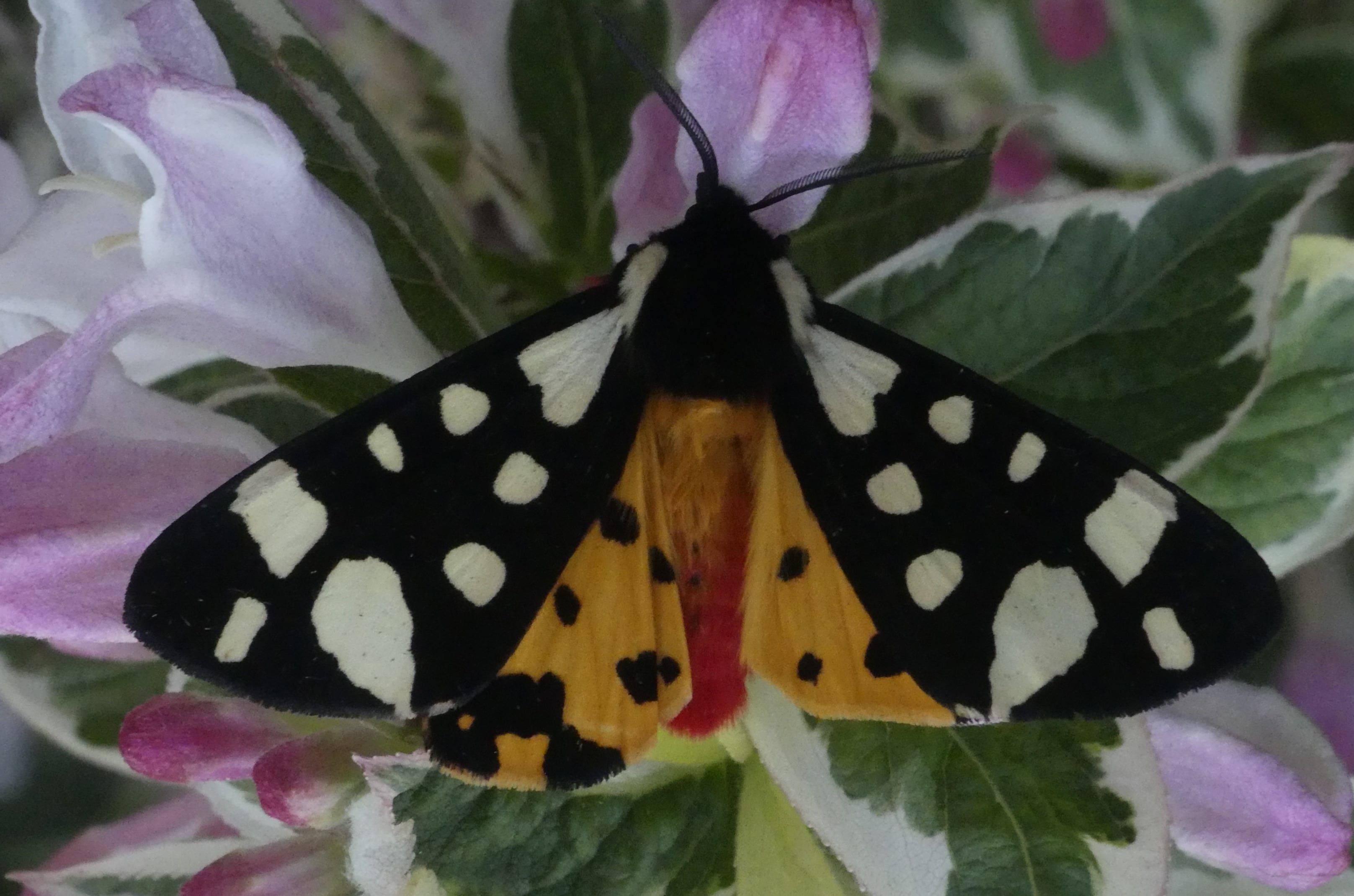
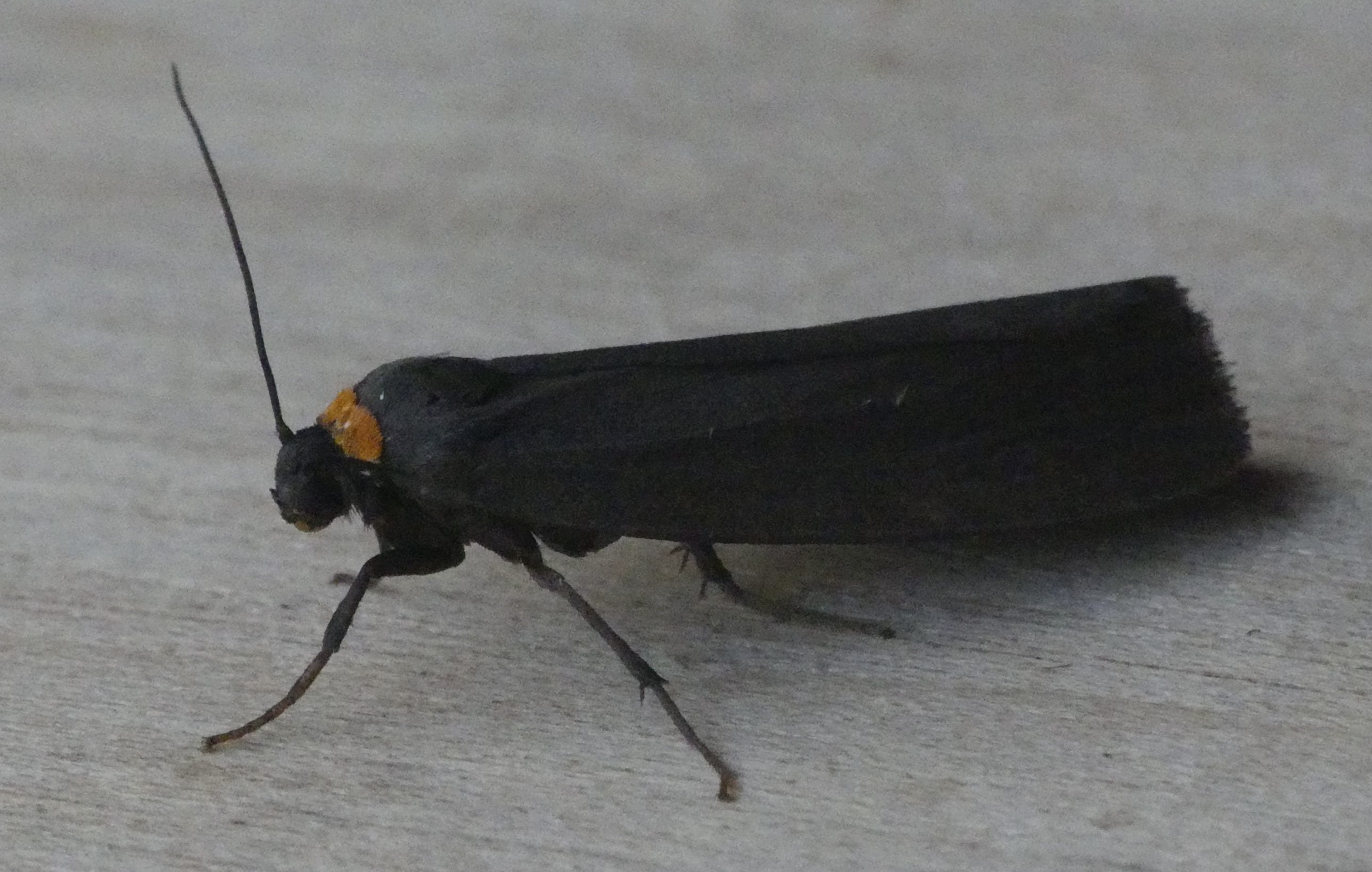
I’ve added this section especially for Cat, who recently posted her list (here). I’ve stopped short of ranking them though, I’ve put them in alphabetical order instead! I’ve added a photo (at the end of the list) for those that I’ve not discussed in previous reports, otherwise I’ve added the link back to the relevant report; just click on the moth’s name then scroll through the report to the species in question. I’ve selected three micros and seven macros:
Chocolate-tip
Cream-spot Tiger
Red-necked Footman
Updates for some species discussed in 2025
(Links to the previous reports can be accessed by clicking on the moth’s name in the section title).
Epiphyas postvittana (Light Brown Apple Moth)
When I featured this moth in November one of my subscribers, Clive Jones, left a comment to the effect that I hadn’t mentioned anything about its ‘costal folds’. Well there’s a simple reason for this, I hadn’t been aware of them!
In moths, it’s usually the females that emit pheromones in order to attract potential mates. A female in the process of doing this is said to be ‘calling’, and the pheromones are capable of attracting males from a considerable distance downwind. However, when a male responds to the signal and comes into the vicinity of a calling female, the female then has to decide whether the male is of the correct species, because although female sex pheromones are species-specific, they all use the same limited number of chemicals and it is the ratio in which the different chemicals are present that identifies the species. Thus males will sometimes respond to pheromones from a female of a different species.
So in some species the males produce their own sex pheromones when they approach a female, and several different functions for these have been suggested; it’s possible more than one could be operating at the same time:
To enable the female to check that the male is the correct species;
To have an ‘aphrodisiac’ effect, i.e. to help make the female receptive to mating;
To cause the female to stop calling and thus reduce the potential competition;
To repel other males, i.e. a sort of chemical mate-guarding.
The costal fold is a small flap in the forewing, lying alongside the leading edge of the forewing (the costa). I had a look through my photos and I found I had one which shows these folds quite clearly:
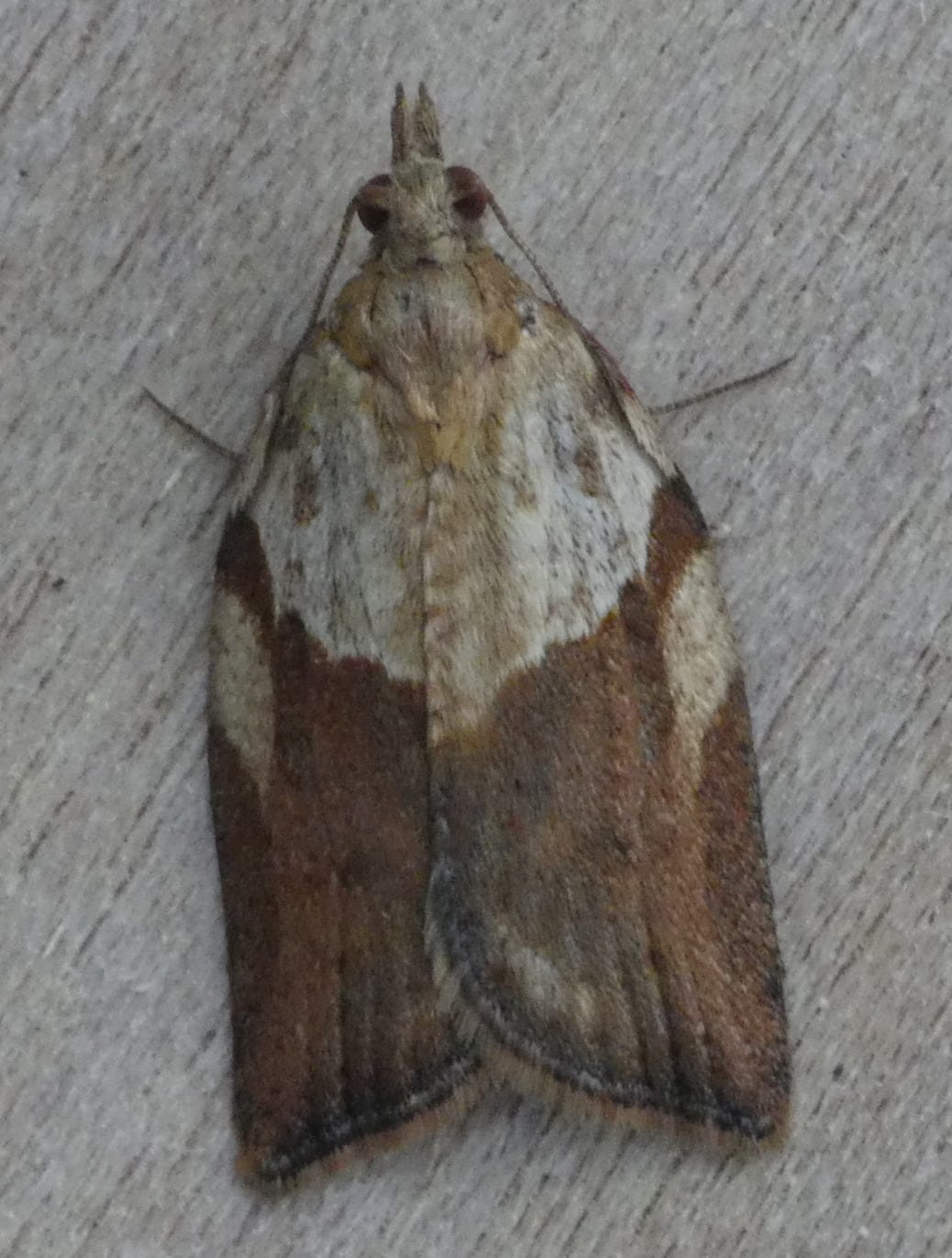
In this photo the moth has actually tucked its antennae into the folds. I haven’t been able to find any discussion of this behaviour anywhere, maybe this particular specimen is just a bit kinky!
Clive includes a description of the way the male uses its scent in the caption to his Flickr photo:
The male Light Brown Apple Moth directs the costal fold towards the female’s antennae, while rapidly fanning his wings. The pheromones may act to persuade the female not to fly off, or may stimulate female abdominal extension to facilitate mating.
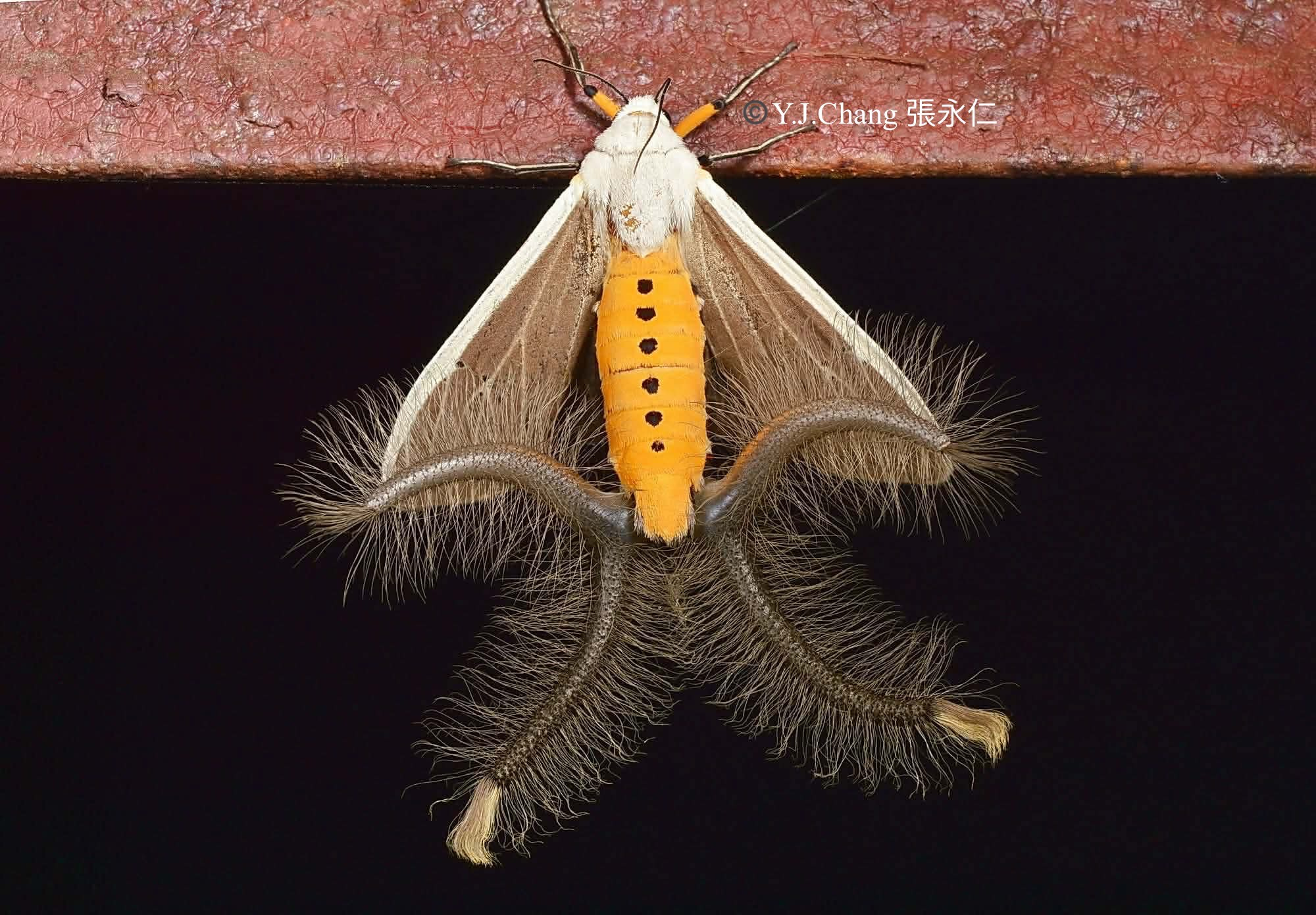
Among those species where the males use pheromones, the mechanics of generation differ quite substantially (whereas in females, the pheromones are almost invariably generated by glands near the tip of the abdomen). In those moths like the Light Brown Apple Moth where a costal fold is used, the scent organ consists of modified scales known as androconia, which are supplied with the pheromone by glands at their base. Other species have patches of androconia on their hindwings, while yet others use bundles of hairs known as hair pencils, which can be located on the legs or on the abdomen. Yet others have inflatable tubes called coremata, hidden when not in use but very obvious when inflated. This photo from Taiwan is a good example:
Udea ferrugalis (Rusty-dot Pearl)
When I featured this moth at the beginning of November, I commented that my count to that point (36) was larger than any previous annual totals I had had. Since then several more have arrived and my total for 2025 is 63, almost double the previous maximum of 32 (in 2023).
This is also the first year in which I’ve seen the moth in December (a total of 5, with the latest on the 21st), and other people who run moth traps in the winter have commented that they are seeing them in December too. This would suggest that the species is having an extended season in France as well (which is where most of those seen here have probably come from); this French moth website (here) gives a histogram by month showing the distribution of all their 5403 records and there are very few in December. If you click the grey icon showing a histogram you should get a more detailed histogram by 10-day periods (well I assume that’s what décade means!).
The Balsam Carpet, Xanthorhoe biriviata
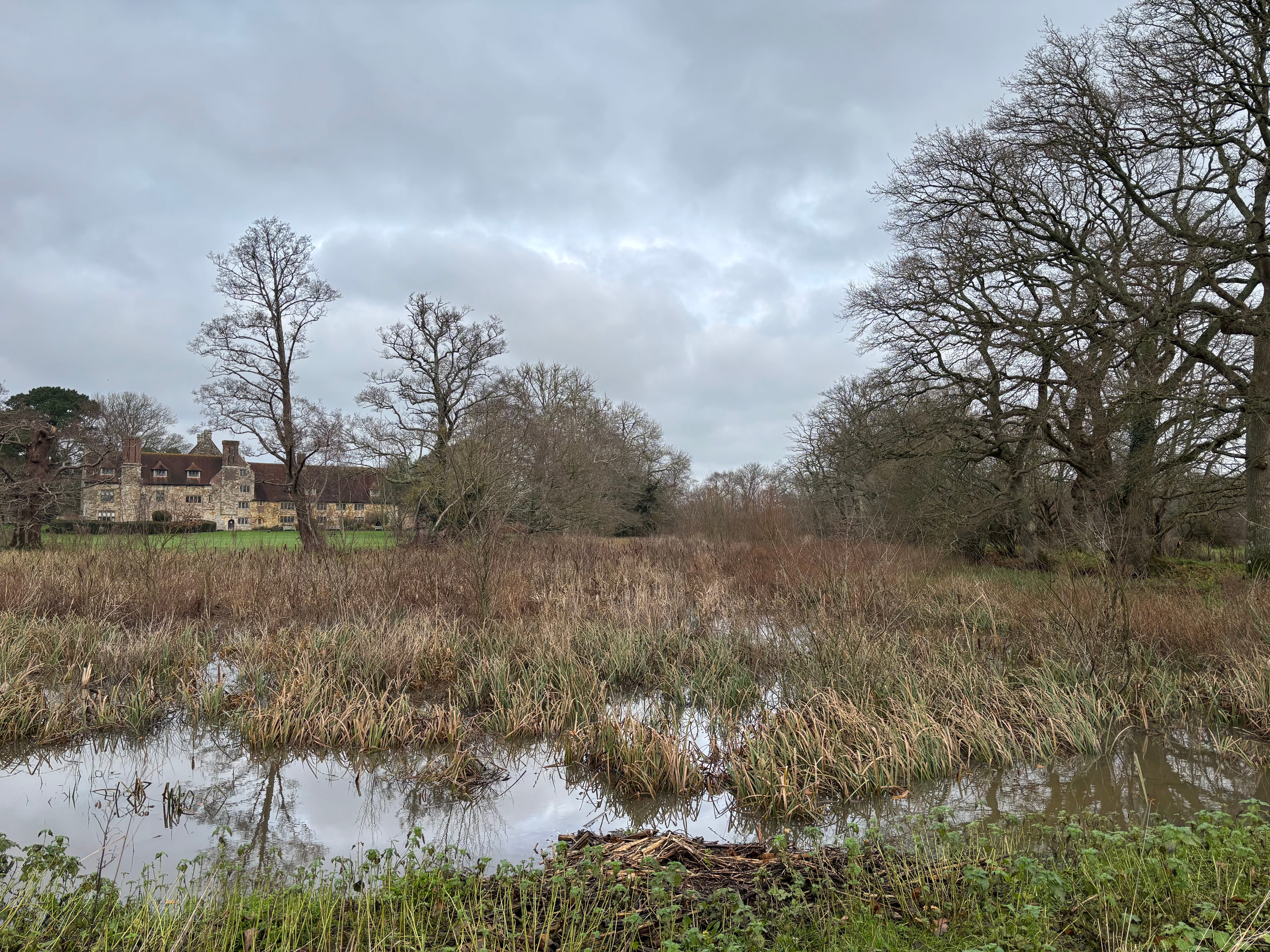
This is one of the first moths I wrote about in these Moth Reports, back in June, and I didn’t say much about it, other than that it was a scarce moth for Sussex and I’d recently seen two, one in my garden trap and the other at a site a few miles from my house, in the grounds at Michelham Priory. This moth is considered to be a resident species which is augmented by migration from the continent, although it’s quite scarce in France and the nearest continental location with substantial number of records is the low-lying area north of Antwerp.
Michelham Priory was founded in 1229, and a moat was dug around it in c. 1390, in response to fears of French raids along the Sussex coast. The moat is now regarded as England’s longest medieval water-filled moat, being almost a mile long, but sadly it is in a very poor state of repair; the sluice gates are broken and much of the moat has silted up and become smothered with invasive plants including Himalayan Balsam and Pennywort.
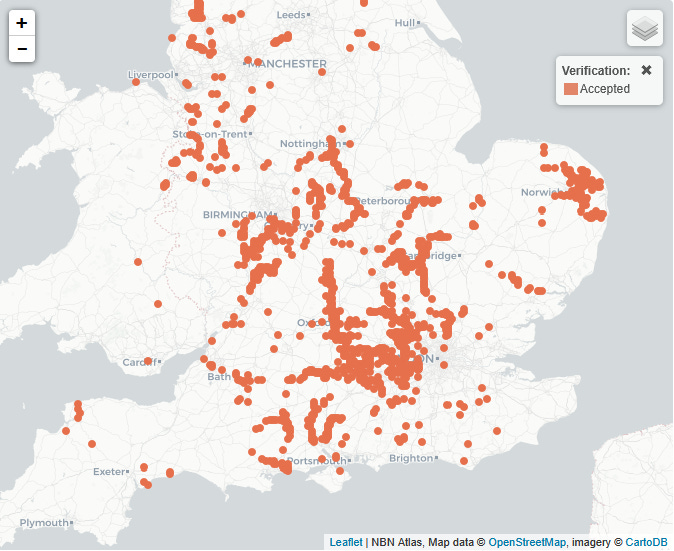
Another plant which I noticed there a couple of years ago is Orange Balsam; this is an another non-native plant (but from North America1, not from the Himalayas) which has relatively few records from Sussex but is commoner in other parts of the country. It’s also called the Spotted Touch-me-not, because it uses an explosive method of seed dispersal and touching the plant can trigger the ejection of its seeds.
Here’s its distribution map from the NBN Atlas:
This is what the flower looks like:

The relevance of this to the Balsam Carpet moth is that it is one of the caterpillar’s two main foodplants; the other is Small Balsam, which is less common in the UK than Orange Balsam. This is the UK distribution of the moth from the Atlas of Britain and Ireland’s Larger Moths:
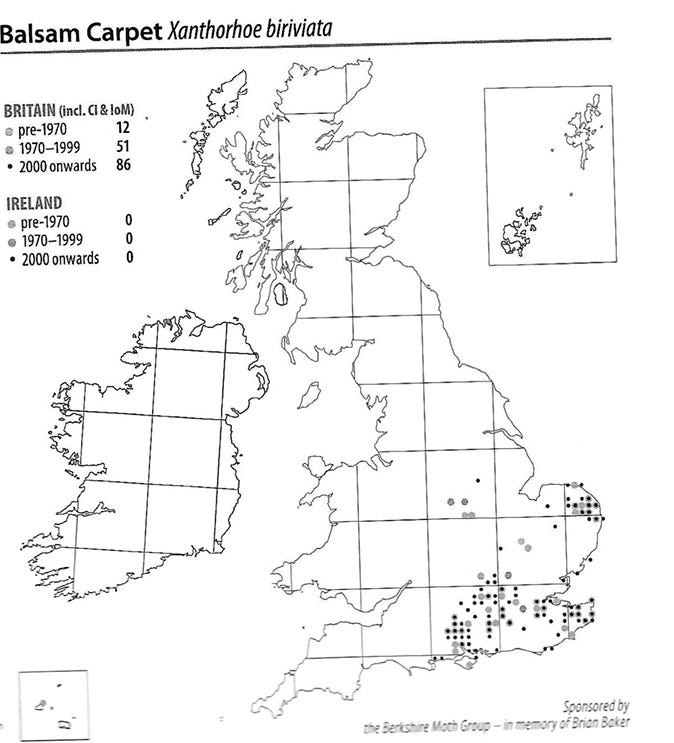
Some correspondence can be seen between the moth’s distribution and that of Orange Balsam; the moth’s main population centres in Hampshire, Berkshire and the Norfolk Broads coincide with areas where the plant is found, but the same is not true for the records from East Kent; there are no Orange Balsam records for this area (and none for Small Balsam either) on the NBN Atlas. So these Kent records are a puzzle; it’s possible they are all migrant records, but another possibility is that there is another foodplant yet to be recognised. However, the Kent Moths website (here) shows that most of these records were obtained between 1994 and 2005, with only a handful of records since then and none at all recorded in some years.
But to come back to the Sussex records, following my original report of having seen one Balsam Carpet moth at Michelham Priory, I subsequently saw at least two more. Here’s a photo of one of them:
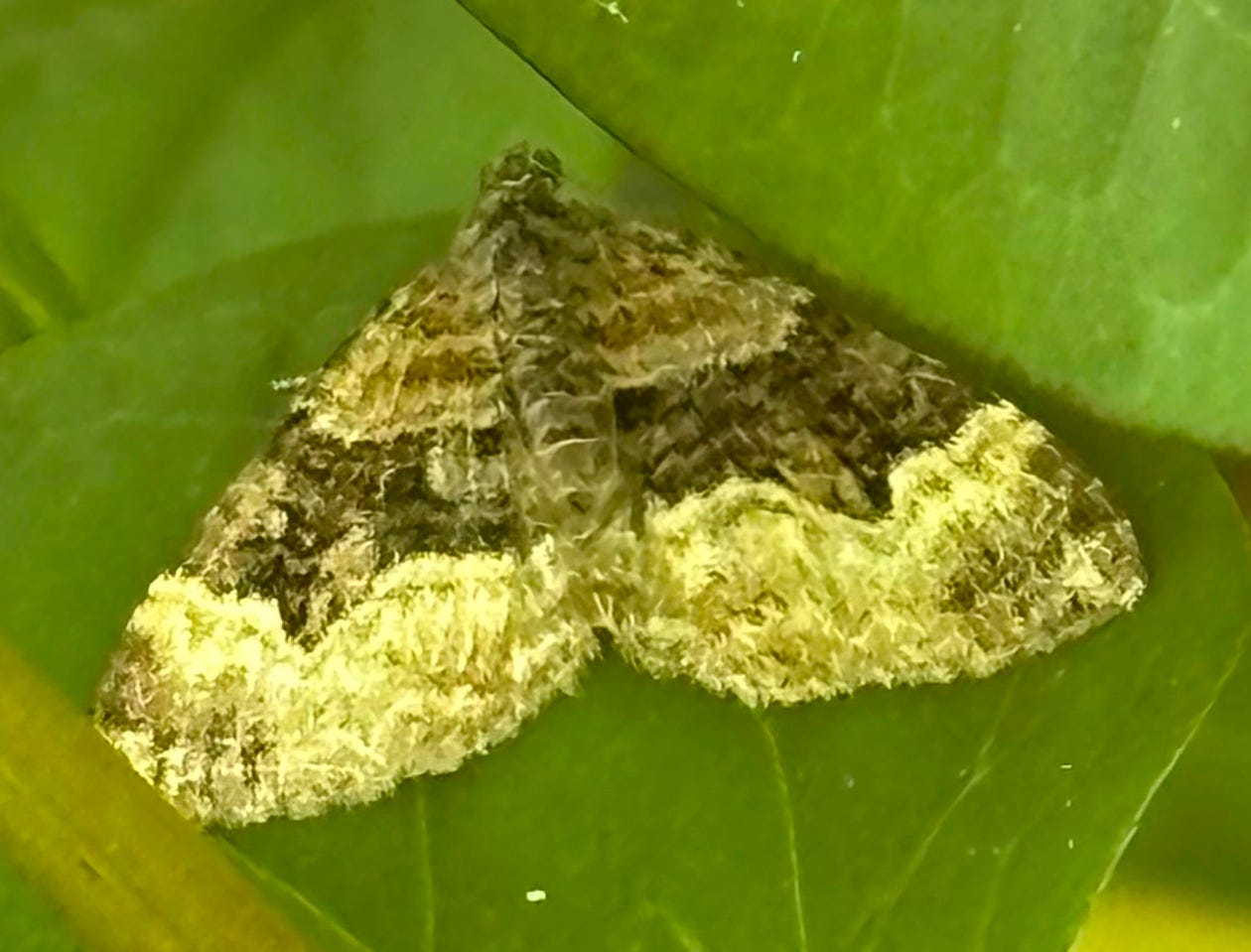
So whilst the previous sparse Sussex records of this moth are compatible with their being migrants, it does now look as though a resident population has become established at Michelham Priory.
Also, after having my first garden record of this species on 21st June, I was surprised to have a second in the trap on 19th July. Whether this is a migrant, or vagrant from the Michelham (or perhaps some other) new colony is not clear. It will be interesting to see how many (if any) put in an appearance in 2026!
That’s it for now. I’ve decided to switch to a fortnightly schedule during the winter months when there aren’t many moths around, so the next issue is scheduled for Tuesday, 20th January.
This newsletter will always remain free. However, if you feel you want to show your appreciation of it by making a financial contribution you can use the button below to take you to a website where you can do so. I will donate any money I receive through this route to a charity of my choice, most likely Butterfly Conservation but other more local wildlife charities might also qualify. Absolutely no obligation, but many thanks if you do.
Although Orange Balsam originates from North America, the Balsam Carpet moth does not occur there.
Fascinating, I've just been summarising my 2025 results, my 4th full year of trapping. Quite different from yours - my top 10 are below (11 as last two tied!). First year LYU wasn't top. Numbers much smaller as I only trap weekly - I do the Garden Moth Scheme so not always the best night of the week, but sometimes I'm relieved by that as 100+ moths are quite enough to identify. I love the fact I still find new species, 23 new macro species this year. I don't always try to identify micros if they aren't on the GMS list. Anyway I love your substack - thanks for all the info :-)
Brimstone Moth
Large Yellow Underwing
Light Emerald
Willow Beauty
November Moth agg.
Riband Wave
Black Arches
Mocha
Nut-tree Tussock
Hebrew Character
Square-spot Rustic
A great read and a nudge to self. Have more sessions in 2026.